In short
- Start from where the sofa will be used and who will clean it.
- Tie every test result, care instruction and certificate to the exact fabric code.
- Approve colour from a labelled physical sample in the room’s own lighting.
Sofa Fabric Checks at a Glance
| Question | What doesn’t answer it | What to ask for |
|---|---|---|
| How durable is it? | Polyester percentage; one abrasion number | Abrasion method and result, seam performance, lightfastness for the colour |
| Will the colour match? | A colour name or phone photo | A labelled physical swatch viewed in the room |
| Will spills soak in? | “Stain repellent” or water beading on a swatch | Whether a moisture barrier is specified, and where |
| How is it cleaned? | “Removable cover” or “easy clean” | Care instructions for that fabric and finish |
| Is it certified? | A logo on a brochure | The certificate number, covered article and validity |
Start With the Room and Its Cleaning Routine
A fabric brief should say where the sofa will be used and how it will be cleaned. A guesthouse lounge, a rental apartment and a retail display need different priorities. Record expected use, direct sunlight, likely spills, and the cleaning products or services available. That tells a supplier far more than asking for “easy-clean fabric”.
How to Judge Fabric Durability
Fibre content alone doesn’t tell you how durable a fabric is. “Polyester fabric” identifies part of the composition, not the weave, weight or finish. Two fabrics with the same composition can perform very differently, so compare named fabric codes, not fibre labels.
The Association for Contract Textiles (ACT) organises its performance guidelines by fabric construction and use, and treats abrasion, colourfastness and physical properties as separate tests. Ask for evidence that matches the wear you expect:
- Surface rubbing: the abrasion method (Martindale or Wyzenbeek) and the result. The two methods are not interchangeable; see comparing Martindale and Wyzenbeek ratings.
- Bright rooms: lightfastness for the selected colour.
- Seams and shaped panels: seam slippage and breaking strength.
- Maintenance: the approved cleaning method for the finished upholstery.
ACT cautions that abrasion results don’t predict service life: twice the rub count doesn’t mean twice the lifespan. Put candidate fabrics in columns and write “not supplied” where evidence is missing, rather than filling the gap with an assumption.
Seam slippage: when fabric opens beside the stitching
Seam slippage is when the yarns of a woven fabric pull apart next to a seam while the stitching stays intact. ACT treats it as a separate property from abrasion and tests it in both directions of the fabric. A dense-looking swatch is not evidence of good seam performance, and stronger thread won’t fix yarns that are moving. Ask for a seam slippage result for the exact fabric, and whether a backing used on the sofa was included in the test.
On a sofa already in use, photograph the whole panel and a close-up showing the thread and weave, and send them with the order details before attempting a repair. Don’t stretch the gap to photograph it.
Why a Swatch Looks Different at Home
The same fabric can look different under another light source. Datacolor notes that two lamps with the same colour temperature can still have different spectral output, so matching the Kelvin rating of two bulbs doesn’t reproduce a viewing condition.
When two materials match in the showroom but not at home, that is metamerism: Konica Minolta describes it as two colours that match under one light and differ under another. It matters most when the sofa must sit beside curtains, a rug or another sofa.
- View the labelled swatch where the sofa will stand, in daylight and with the evening lamps on.
- Place coordinating samples beside it and compare them together.
- Keep the physical swatch for approval; a screen or photo is not a colour standard.
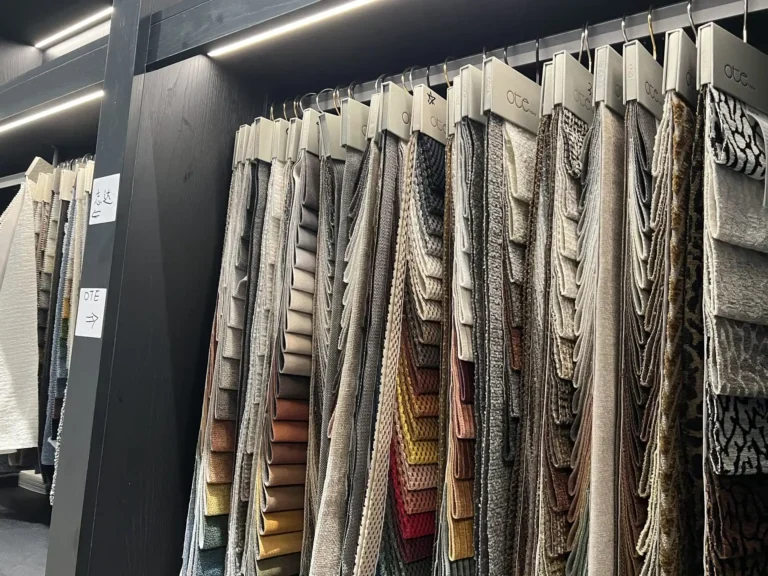
- Record fabric references, not colour names. “Oatmeal” from two suppliers is not one material.
For large projects, agree the reference sample and viewing conditions with the supplier before production approval.
Does Stain-Repellent Fabric Keep the Cushion Dry?
No. ACT distinguishes a stain-repellent finish from a moisture barrier. A repellent slows absorption at the surface; how well it works depends on the fabric, the finish and what was spilled. It is not waterproofing, and it doesn’t allow harsher cleaners.
“Easy clean”, “stain resistant” and “waterproof” are different claims. Ask whether each one describes the face fabric, a backing, a separate liner or the complete cushion. If keeping liquid out of the filling matters, ask where the barrier is, whether it wraps the whole cushion, and how seams and zips are handled. Water beading on a flat swatch doesn’t show how a finished cushion behaves, and don’t pour liquid on a finished sofa as a test.
Confirm Cleaning Before You Order
Ask for care instructions for the exact fabric and any finish on it. A removable cover is not necessarily washable; those are separate questions. Agree how spills, routine cleaning and replacement covers will be handled, and don’t describe a fabric as stain-proof or bleach-safe without written support from the fabric supplier.
Does a Fabric Certificate Cover the Whole Sofa?
A fabric certificate covers the article it names, not every product made with it. OEKO-TEX, for example, describes STANDARD 100 as testing a certified textile article for harmful substances, and asks users to verify labels by certificate number or QR code.
- Get the full certificate or a verifiable record, not a cropped logo.
- Check the holder, the article description, the scope and the validity date.
- Match the covered article to the fabric code in the sofa specification, and check again if the fabric changes.
A harmful-substance certificate says nothing about abrasion or seam strength, and a textile label is not proof that the assembled sofa meets the rules of your destination market. Check those separately.
Fabric on Compressed Sofas
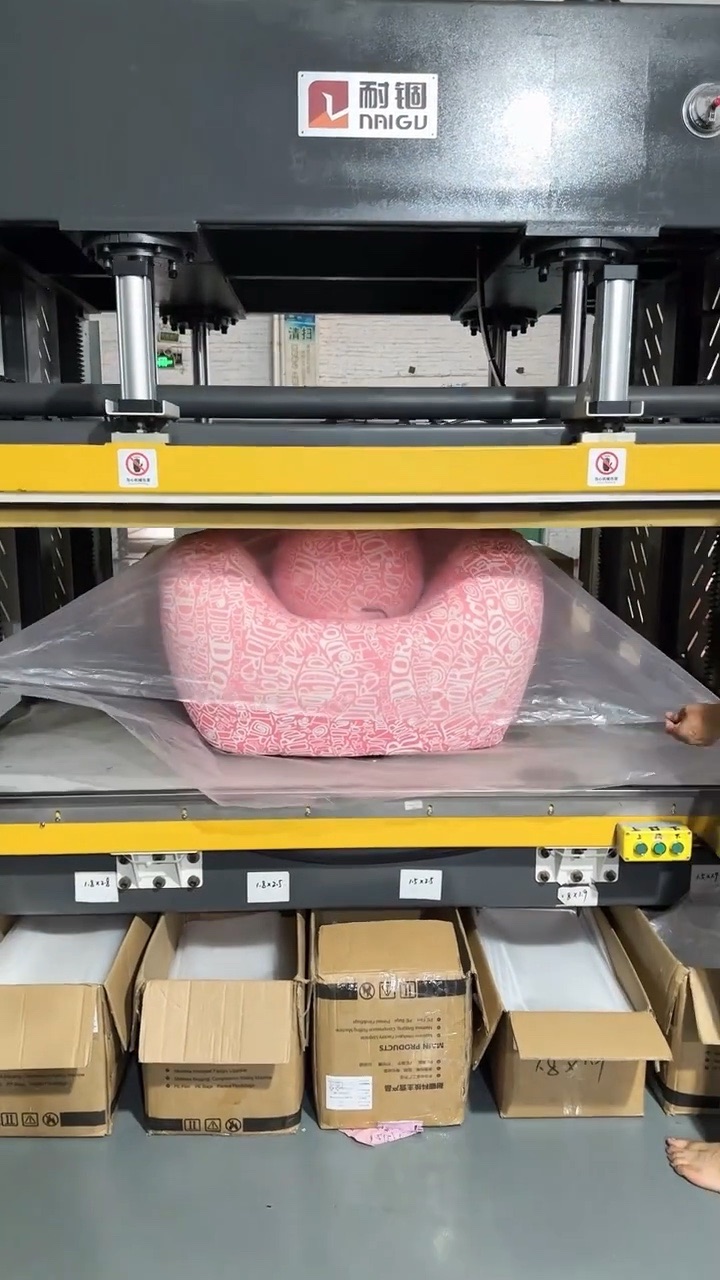
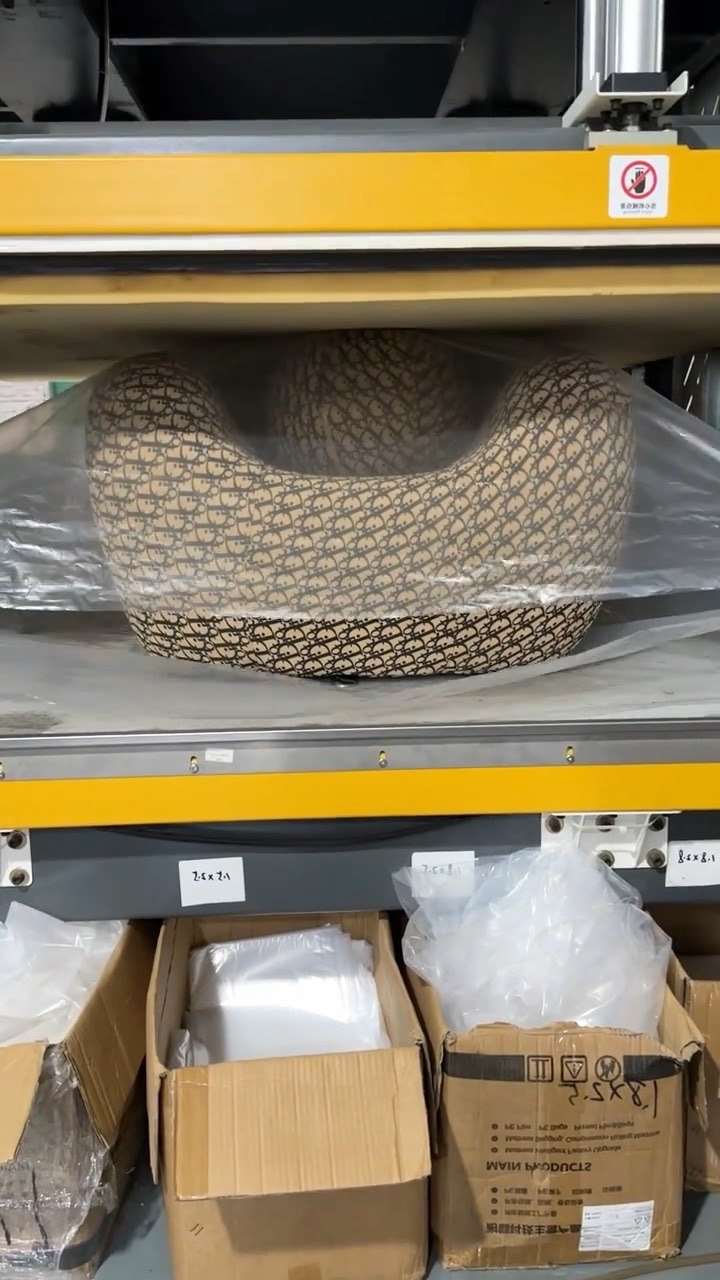
For roll-packed sofas, inspect a sample after its real packing and recovery. Look for creases that don’t relax, seam alignment and cover fit before approving the fabric, and keep any acceptance criteria with the approved sample. See our compressed sofas for the models this applies to.
Fabric Approval Record
| Record | Details |
|---|---|
| Identity | Fabric supplier, fabric code, colour code, sample date |
| Composition and use | Fibre content, intended application |
| Evidence | Abrasion method and result, seam slippage, lightfastness; “not supplied” where missing |
| Appearance | Approved seam, pattern and pile direction; viewing conditions for colour approval |
| Care | Cleaning method, restrictions, any finish or barrier |
| Certificates | Certificate number, covered article, validity |
| Supply | Batch matching, spare fabric and replacement-cover arrangements |
Fabric is one part of the seat. Review it together with the foam layers and the seat as a whole, since a different cover can change how a seat feels. On larger projects, put the fabric code on the room-by-room schedule so every team works from the same reference.
Choosing Fabric for a YEINIHOME Sofa
YEINIHOME upholsters its sofas in its own factory in Foshan. In your enquiry, name the model, where it will be used and how it will be cleaned, plus any fabric reference you already have. Ask which fabric goes on the seat, back and other parts, and which documents are available for that fabric code. Orders start from one piece per model, so you can approve the upholstery on a finished sofa before a larger order.
Frequently Asked Questions
Is polyester sofa fabric durable?
It depends on the fabric, not the fibre. Compare abrasion, seam and lightfastness results for the specific fabric code.
Does a removable cover mean it is machine washable?
No. Removability and the permitted cleaning method are separate. Ask for the care instructions for the actual fabric and cover.
Can I choose fabric from a photograph?
Use photos to shortlist. Approve from a labelled physical sample with its care method and evidence.
Is metamerism a fabric defect?
No, it is a colour-matching effect. Whether a match is acceptable depends on the agreed sample and viewing conditions.
Does a fabric certificate mean the sofa is certified?
No. It covers the named textile article. Match it to your fabric code and check other requirements separately.
Is seam slippage the same as pilling?
No. Pilling is fibre balls on the surface; seam slippage is yarns moving apart beside a seam.
Sources and References
Association for Contract Textiles: Performance guidelines
Association for Contract Textiles: Abrasion disclaimer
Association for Contract Textiles: Physical properties of woven fabrics
Association for Contract Textiles: Stain repellent finishes