Buying Guides / Beds & Bedroom
How to Match a Bed Frame to a Mattress
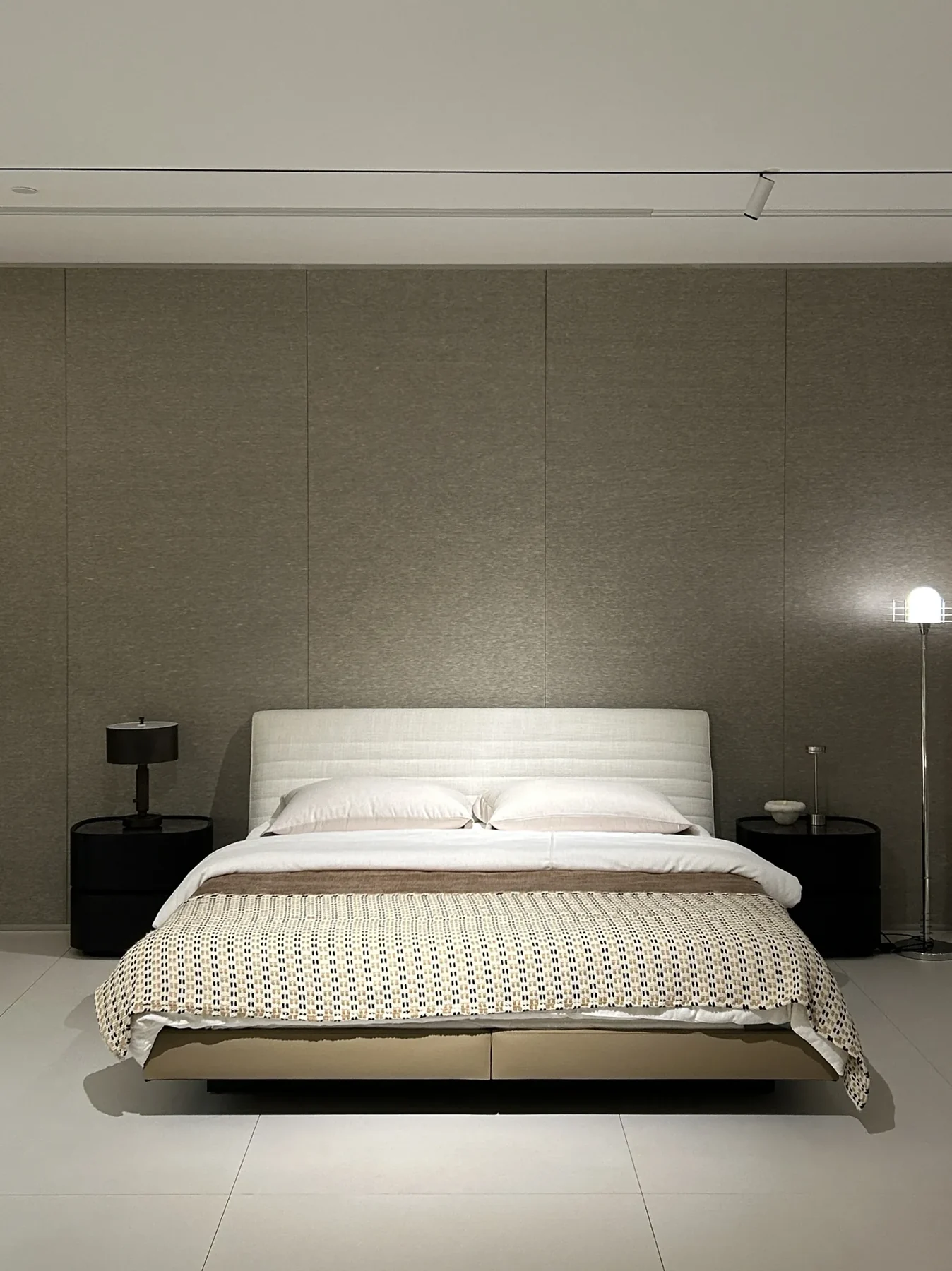
Match a bed frame to the mattress’s stated width, length and thickness, then check the frame’s usable opening and support specification. A size name alone is not enough to approve a bed for a hotel room or apartment.
Put Three Sets of Dimensions on the Drawing
A room schedule that says only “king bed” leaves several decisions open. Ask for dimensions in one agreed unit and identify whether each figure describes the mattress, the opening inside the frame, or the outside of the furniture. Upholstered rails and a wide headboard can occupy space beyond the sleeping surface.
| Measurement | What to Record | Why It Matters |
|---|---|---|
| Mattress | Width, length, thickness and model reference | Identifies the actual item being matched |
| Frame opening | Usable width and length, corner shape and recess depth | Allows the supplier to confirm the proposed fit |
| Overall frame | Maximum width, length and headboard projection | Shows the footprint to place on the room plan |
Confirm the Support as Well as the Fit
The National Bed Federation advises checking that a mattress and base are suitable for use together, particularly when purchased separately. Its bed-base guidance also directs buyers to the mattress manufacturer’s recommendations for slat dimensions. A mattress fitting inside the frame does not settle support compatibility.
Send the mattress specification to the bed supplier and obtain written confirmation of the proposed base arrangement. Record who supplies the mattress and who checks the combined assembly. If the mattress model changes later, reopen that check before treating the original drawing as approved.
Check the Dressed Bed in the Room
For a hotel mockup room, use the proposed mattress, protector and bedding. Check whether housekeeping can tuck the bedding around the rails, whether the mattress sits at the intended height, and whether adjacent cabinet drawers open as planned. Record any interference in photographs with the drawing revision visible.
Do not add an arbitrary clearance to every order. Ask the suppliers to agree the dimensional tolerance and fit for the selected construction. A heavily padded rail, a rigid timber frame and a platform base may need different details.
Record the Finished Bed Height
On the room section, show the support surface height and the proposed mattress thickness. Their sum gives the nominal mattress-top level before loading; identify any separate topper as well. Review that level beside the cabinet top, headboard and intended bedding. Keep the measurement basis consistent rather than comparing a bare mattress in one room with a fully dressed bed in another.
If a thicker mattress is substituted, check the visible headboard, bedside access and bedding fit again. This is a coordination check for the selected room, not a universal recommendation for bed height.
What to Send With the Enquiry
When shortlisting beds and bedroom furniture, send YEINIHOME the room plan, quantity by room type and mattress specification. Mark any mattress information still undecided. Keep the bed, bedside cabinet and bench on the same guest-room furniture schedule so changes to one item are checked against the others.
The approval record should name the frame revision and mattress model together. Keep that pairing in the purchase documents rather than relying on a showroom photograph.
Compare tolerance ranges, not just nominal sizes
Ask both suppliers which dimensions are nominal and what variation is permitted. Record how the usable frame opening is measured, including any padded rail or corner that reduces it. A dimension taken at the top of an upholstered rail may not describe the space occupied by the mattress lower down.
Consider a hypothetical width check. A mattress is specified as 1,800 mm with a permitted variation of plus or minus 10 mm. A frame opening is specified as 1,820 mm with a permitted variation of plus or minus 5 mm. The widest permitted mattress is 1,810 mm; the narrowest permitted opening is 1,815 mm. Their difference is 5 mm across the whole width, not 5 mm on each side.
These invented figures demonstrate the calculation only. They are not YEINIHOME dimensions, manufacturing tolerances or a recommended clearance. They also do not establish that the pairing is suitable: corner shape, padded rails, length, bedding access and the suppliers' fit requirements still need review.
Resolve a range conflict before ordering
If the proposed ranges overlap in a way that allows the mattress to exceed the opening, ask the suppliers to resolve the pairing. Do not simply enlarge the frame drawing without checking its outside footprint and nearby furniture. Record the revised values and the person who confirms them.
The National Bed Federation's base guidance advises checking mattress and base compatibility, especially when they are bought separately. Dimensional fit is one part of that review; retain the agreed support specification as well.
Use the APM change-control sequence when an approved mattress or frame changes: record the proposal, review its effects and issue the accepted revision. Send YEINIHOME (言逸家) both suppliers' dimension sheets with the bed enquiry. Keep any unresolved tolerance or measurement method visible in the quote brief.
Seen on Real Samples
Sourcing notes with photographs of YEINIHOME samples that show these checks in practice:
Questions Before You Order
Does the Same Size Name Guarantee a Match?
No. Compare actual dimensions and support requirements in the agreed units, then obtain confirmation for the proposed pairing.
What Changes if I Choose a Thicker Mattress?
Recheck the mattress-top level, visible headboard, bedside access and bedding fit. Include any separate topper in that review.
Is the difference between frame and mattress widths the clearance on each side?
No. It is the total width difference. Actual side gaps depend on positioning and shape; confirm the required fit and measurement method with the suppliers.
Explore Beds & Bedroom Furniture · Explore Mattresses
References
Sources reviewed October 23, 2026. Suggested records and hypothetical examples are editorial tools. Standard references, where included, are limited to the publicly readable scope and do not certify a product.