In short
- Ask for frame materials part by part, plus the seat support, legs and module connectors.
- Make sure every drawing and test report matches the exact size and layout you’re ordering.
- Weight, leg count and appearance don’t prove strength.
Frame Specification Checklist
| Check | Ask the supplier for | Resolve before approval |
|---|---|---|
| Model and layout | Model reference, dimensions, module drawing | Does it match the quoted size and orientation? |
| Frame | Materials by component; photos of main joints | Are structural parts separated from visible trim? |
| Seat and back support | Drawing or description of webbing, springs or platform | What sits under the cushions and how is it fixed? |
| Legs and hardware | Leg positions, parts list, assembly instructions | What must be fitted on site? |
| Module connections | Connector photos, assembly sequence | How do the modules join and separate? |
| Test evidence | The report, tested model, standard edition | Does it cover the proposed construction and use? |
If two suppliers describe different constructions, resolve that before comparing prices. Our guide to comparing sofa quotations covers the wider order scope.
Frame Materials, Part by Part
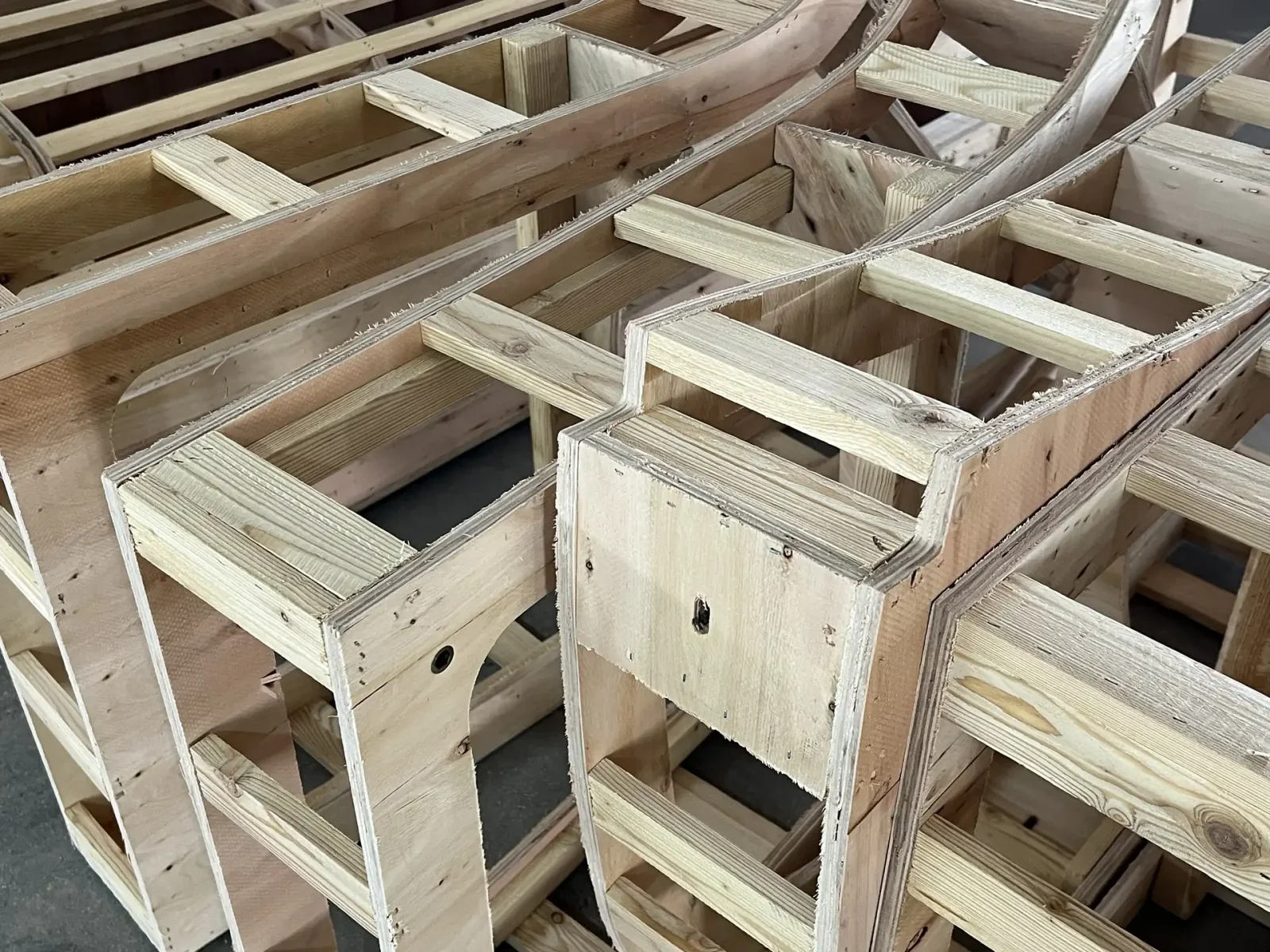
A rail visible under the seat doesn’t tell you what the arms, back or corner blocks are made of. Ask for a component list: seat rails, arms, back, corner blocks, support attachment points, legs and decorative trim, each with its material.
Engineered wood is not automatically a weakness. APA, the Engineered Wood Association, describes plywood, OSB and structural composite lumber as materials used in upholstered furniture frames. What matters is which material is used where, its thickness and how the joints are made. See is plywood a bad sign in a sofa frame?
If documents conflict, for example a quotation naming plywood arm panels while a later drawing says “solid wood frame”, don’t assume the newer document wins. Ask for a component-specific correction and which document it replaces.
What You Can Check Under a Sofa
Ask the seller how to view the underside safely, or for a construction photo. Don’t crawl under a sofa someone is holding up, tip a heavy piece alone, or pull off a stapled dust cover.
- Photograph each leg and its mounting, including any centre supports and where they meet the floor.
- Note the seat support (webbing, springs or platform). If it’s hidden, ask for a drawing tied to the model.
- On sectionals, find the connecting hardware and ask how each module is supported when joined.
- If you see a gap beside a leg mounting or the sofa rocks, photograph it and ask whether it matches the intended assembly.
The Canadian Conservation Institute notes that weak joints may only show on close inspection, so a tidy dust cover proves little, and a rough patch in a photo doesn’t prove a defect either. An underside check raises questions; it doesn’t certify strength.
Does a Sofa Need a Centre Support Leg?
It needs whatever supports are specified for its frame and length. There’s no universal leg count, and six legs aren’t automatically better than four. Ask for an underside drawing showing the outer feet, any middle supports and where they attach, and check whether a longer version than the showroom sample changes the layout.
If a middle foot sits clear of the floor, photograph it with the sofa empty, note the floor surface (a rug edge can cause it) and ask whether the setup instructions require contact or a set clearance. Don’t remove a specified centre leg to fit a robot vacuum, and don’t wedge objects under the frame.
Does a Wider Custom Sofa Need a Different Frame?
It needs a frame review; what changes depends on the model. Extra width might go into wider arms, a longer seat or an added module, which are different requests. For a longer uninterrupted seat, ask whether the front and rear rails, cross-pieces, seat support and leg positions change. For an added module, ask about the connection and the supports under each section.
A test report for the standard size doesn’t automatically cover a wider version. Ask whether it applies, and don’t approve the wider frame from the smaller sample alone. Also recheck delivery: a wider sofa may not fit the same route or lifting plan.
Does a Heavy Sofa Have a Stronger Frame?
Not necessarily. A listed weight may include cushions, mechanisms, feet and packaging, and strength depends on construction, not mass. Check whether a figure is gross shipping weight or net product weight, and for one module or the whole layout, before comparing. Use weight for delivery planning; ask separately for frame materials and load information. Product weight is not an occupant limit.
Test Evidence for Hotel and Contract Sofas
A standard number in a quotation is not a test report. For contract seating, BS EN 16139:2025 sets safety, strength and durability requirements for non-domestic seating; its published scope excludes upholstery durability, ageing and flammability, so a frame report doesn’t answer fire or fabric requirements.
- Check the report’s model, photos, dimensions, tested configuration, standard edition and results.
- List differences between the tested sample and your order, and have the laboratory or project reviewer confirm whether the report still applies.
- Resolve fire and upholstery requirements separately with the project’s reviewer.
Using the Sample Review
Bring the agreed drawing, quotation and construction notes. Match the sample reference and layout to the order, check feet, connectors and hardware against the parts list, and ask for photos taken before upholstery. Record discrepancies with photos and exact locations, and get written agreement on any change before approving a revised sample. A sample review finds mismatches; it doesn’t prove long-term durability. See sofa sample inspection before a bulk order.
After Delivery: Noises, Bolts and Wood Care
Does a squeaking sofa mean the frame is broken?
Not by itself. Record a short video of ordinary sitting, note which seat (from the sitter’s viewpoint), when it started and whether it’s near a module joint. Check for a visibly loose leg or a support off the floor. Don’t spray oil into gaps, add screws or cut the dust cover before the source is identified. If you also see a crack, a loose structural part or sudden movement, stop using that seat and ask for an inspection.
Should you tighten every bolt?
No. Tighten only the fasteners the assembly or maintenance instructions name, with the stated tool and order. A visible bolt might be a leg bracket, a module connector or a fixed frame joint. Don’t substitute longer screws or add hardware. If a connection keeps loosening after an approved adjustment, report it; repeated loosening needs a diagnosis, not more tightening.
Should you oil the wood inside the frame?
No, unless the maker says so. The Canadian Conservation Institute explains that wood doesn’t need to be “fed” and oil can’t prevent drying from low humidity; a stable environment matters more. Care instructions for exposed wooden legs or trim don’t apply to the hidden frame.
Moving a sofa
CCI advises checking furniture for damage and loose joints before moving it, and lifting rather than dragging, since dragging stresses legs and joints. Use the lifting points in the model’s instructions; see can you lift a sofa by its arms?
Frame Information From YEINIHOME
YEINIHOME builds its sofas in its own factory in Foshan. In your enquiry, include the model, quantity, room use, required dimensions and delivery destination, and ask for the frame materials by section, the seat support arrangement and the module connections for that configuration. For a custom width, ask which frame sections, supports or connectors change, and get the revised drawing in writing. Orders start from one piece per model, so a sample can be checked before a larger order.
Frequently Asked Questions
What is the best wood for a sofa frame?
There’s no single answer. Solid hardwood, plywood and engineered wood can all work; what matters is which material is used in each part, its thickness and the joints.
Can I judge the frame from finished photos?
No. Ask for a frame description and photos of joints and supports before upholstery, matched to your model.
Does one test report cover every size in a range?
Don’t assume so. Compare the tested size and configuration with yours and ask the lab or reviewer to confirm.
Is a frame test enough for a hotel sofa?
No. Fire, upholstery and other requirements need separate evidence.
What should I ask about a sofa delivered in sections?
The module drawing, connector details, included hardware, assembly instructions and who assembles it on site.
Sources and References
BSI: BS EN 16139:2025 public preview
APA – The Engineered Wood Association: Upholstered furniture
Canadian Conservation Institute: Basic care of furniture and wooden objects