Buying Guides / Whole-Home Furniture Guides
Allocating a Whole-Home Furniture Budget by Room
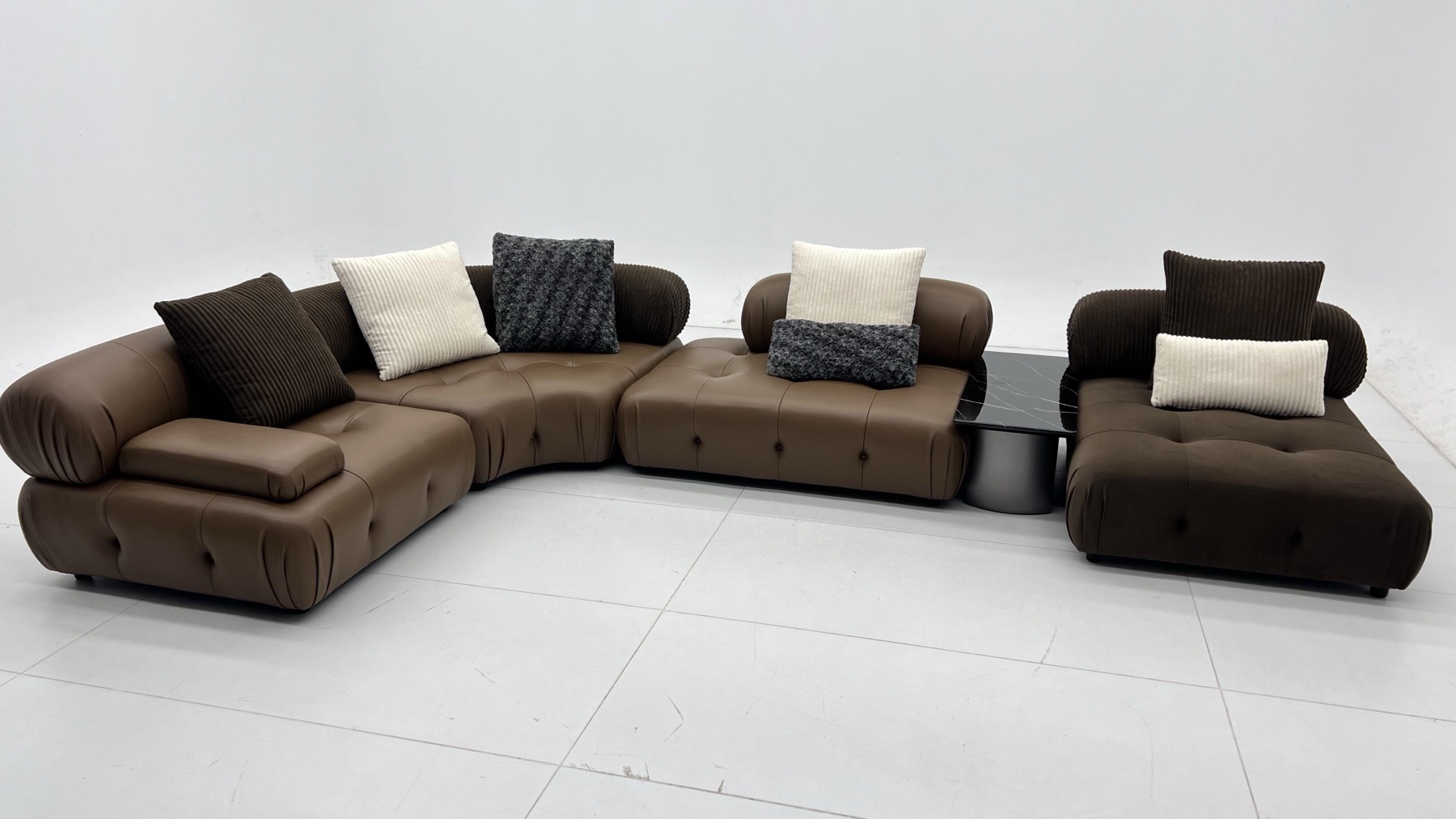
Allocate a furniture budget from the required room schedule, then review use, replacement difficulty and delivery scope. Avoid assigning fixed percentages before the item quantities and essential requirements are known.
Establish the Included Scope
List furniture by room and distinguish the base package from optional upgrades. Separate product allowances from delivery, installation and any other quoted services. An allowance for a sofa set is not comparable with an offer that also includes tables, lamps and transport.
Compare Options Without Losing Function
For each proposed saving, record what changes in material, dimensions, maintenance or appearance. Keep essential quantities and room fit visible. Check whether the option requires a different layout or excludes a needed component before accepting the lower unit price.
Keep a Change Record
Track the original allowance, current quote, approved change and unresolved amount for each room. Decide who can approve an upgrade and how it affects other rooms. Reconcile the schedule before ordering so the total reflects the final choices rather than a mixture of old and new quotes.
Approval Record
- Room-by-room included scope
- Base options and upgrades
- Delivery and installation allowances
- Approved changes and remaining decisions
RIBA links the project brief with design coordination and cost planning. RIBA Plan of Work 2020. Cost planning works alongside the brief and design decisions; no universal furniture budget split is implied.
Reconcile a whole home furniture budget without mixing revisions
Keep the approved baseline, agreed changes and pending options in separate columns. Give each room an item schedule and carry the same item references into the price comparison. When a package changes, compare the full scope before calling the difference a saving.
Consider a hypothetical furniture-only baseline of USD 20,000. An approved dining-table change adds USD 600 and an approved bedroom change reduces the total by USD 250. The revised approved furniture amount is 20,000 + 600 − 250 = USD 20,350. A further USD 900 upholstery option remains pending; accepting it would make the furniture amount USD 21,250.
These figures are an arithmetic example, not YEINIHOME prices or a suggested villa budget. Both totals exclude any delivery, installation, tax or other charge not included in the stated baseline. An unquoted service should be shown as “not yet quoted”, not silently entered as zero.
Check whether a lower total removes a required item
If an alternative omits a bedside cabinet, changes a paired-chair quantity or leaves the dining-table base outside the price, record that scope change explicitly. Compare the resulting room function with the approved brief. A reduction caused by removing a required component is different from a lower price for an equivalent package.
RIBA connects design coordination with the cost plan. APM change-control guidance calls for assessing changes and updating the plan after approval. For the room budget, retain the date and reference of the accepted offer, the person approving the change and the items affected.
Send YEINIHOME (言逸家) the current room schedule, approved total and unresolved alternatives through Villas & Whole Homes. Ask for quotations against the same dimensions, finish references and included services. Keep the separate package-coverage comparison beside the budget to check that the total includes the required rooms and items.
Keep the room budget separate from the payment schedule
A deposit is a payment towards an agreed amount. It should not appear as an extra furniture cost or be mistaken for a discount when comparing the room budget with the unpaid balance.
YEINIHOME (言逸家) states 50% deposit and 50% balance payment in its published order information. Those percentages do not specify the balance-payment milestone. Confirm the timing, amount covered and applicable terms in the quotation for the actual villa order; do not assume “before dispatch” or “after delivery”.
For a hypothetical agreed amount of USD 20,000 on a 50/50 split, the deposit and balance are each USD 10,000. After the deposit is paid, the agreed amount remains USD 20,000 and the unpaid amount is USD 10,000. This example is not a YEINIHOME quotation and assumes no approved changes or separate charges.
Reconcile a change before adjusting a payment
If the buyer later changes a room's selections, keep the accepted revised total with the order revision. Ask how the payment schedule will be adjusted. Do not automatically charge half of an optional upgrade before it has been approved, or infer the treatment of a credit from the original percentages.
APM's change-control guidance calls for assessing changes and updating the plan after approval. In the payment record, retain the agreed amount, payments recorded, remaining amount, confirmed milestones and charges still awaiting quotation. A missing date should remain “to be agreed”.
For a villa and whole-home furniture brief, keep this order-level payment record alongside the room budget. Use the room schedule to check the scope and the payment record to check the agreed amounts and timing.
Count shared charges once before allocating them to rooms
A single delivery or installation charge may cover several rooms. Keep it as one order-level line unless the quotation actually breaks it down. Adding the entire charge to every room would overstate the whole-home total.
Suppose an imaginary order contains USD 6,000 of living-room furniture and USD 4,000 of bedroom furniture, plus a single USD 1,000 delivery charge. The combined amount is USD 11,000. If the buyer chooses to allocate delivery in proportion to furniture value, the room allocations are USD 600 and USD 400. Those allocations add back to the same USD 1,000.
This is an internal budgeting example, not YEINIHOME pricing or a rule for charging delivery. A difficult upstairs delivery could cost differently from a ground-floor delivery. Value-based allocation does not prove either room's actual handling cost or define the supplier's service responsibilities.
Reconcile room totals with the order total
Record the allocation basis and retain the original quoted shared charge. If an approved room change affects the order, ask whether the shared service price changes before recalculating the allocation. APM: change control supports evaluating such effects before updating the baseline.
In the YEINIHOME (言逸家) villa brief, distinguish a quoted service, an internal allowance and a cost still awaiting quotation. Reconcile the room allocations to the complete order so a shared charge is neither duplicated nor lost between rooms.
Questions Before You Order
Should Every Room Receive the Same Budget?
No. Build allowances from the required items and agreed scope, then review priorities with the buyer rather than applying a fixed split.
How Should Delivery and Installation Be Budgeted?
Record them separately when quoted that way, with their service boundaries and assumptions. Reconcile the total against the final furniture schedule.
Should an unapproved upgrade be included in the committed total?
Keep it visible as a pending option and show its possible effect separately. Add it to the approved total only after the buyer accepts the revised scope and price.
Should a paid deposit be deducted from the furniture budget?
Show it as paid against the agreed order amount. The remaining amount falls, while the cost of the agreed scope stays the same unless an approved change alters it. Confirm payment milestones separately.
Should I add the full delivery charge to every room budget?
No. Count an order-wide charge once. If you allocate it across rooms, record the allocation basis and check that the room shares add back to the quoted total.
Continue Your Procurement Review
References
Sources checked October 27, 2026.