Buying Guides / Lounge Chair Guides
Swivel Lounge Chairs: Base and Movement Checks
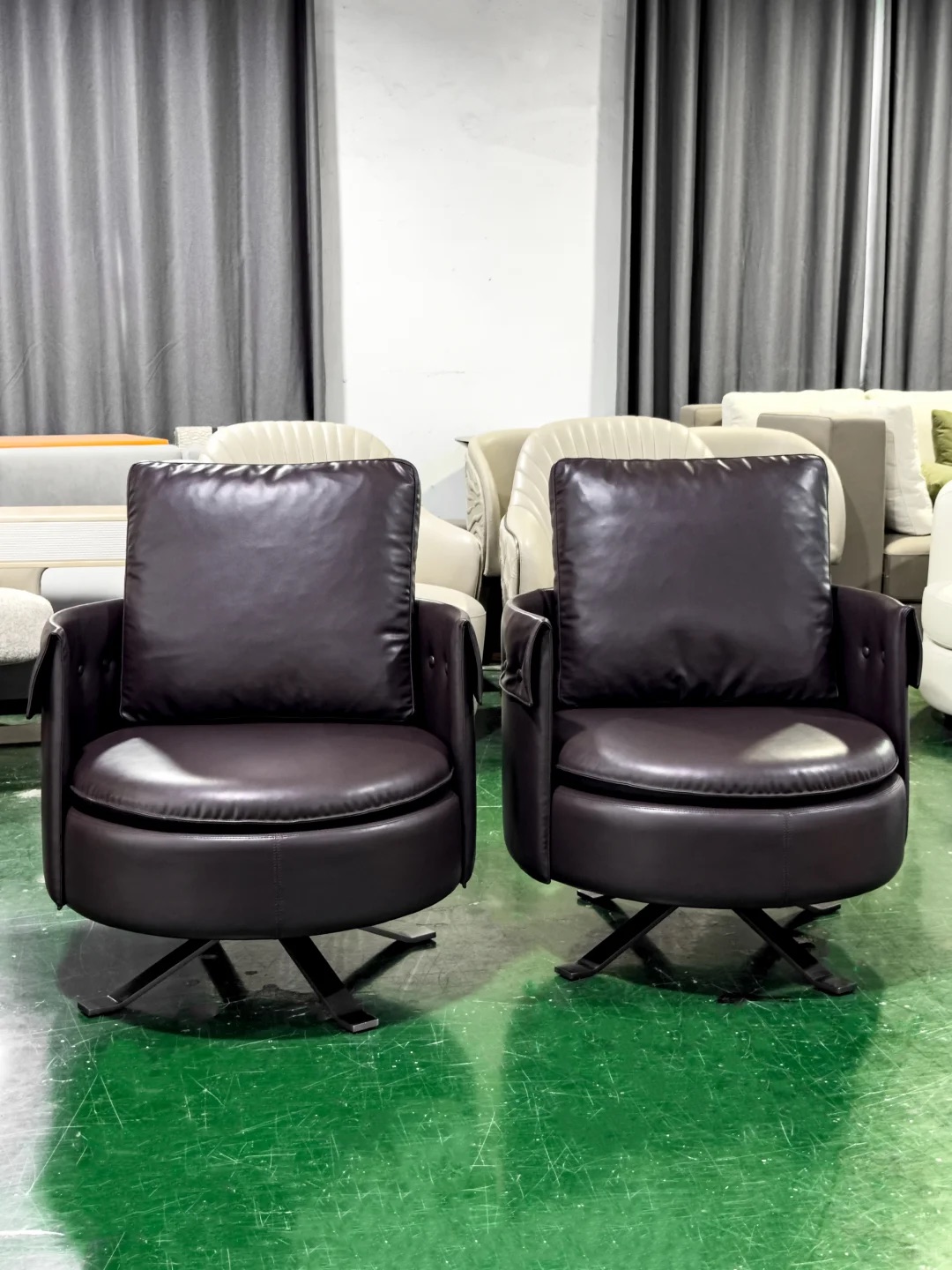
Check a swivel chair in its full movement envelope, with the base and mechanism specified for the ordered model. The chair’s forward-facing footprint is not the whole area it may occupy.
Draw the Moving Outline
Place the chair near its intended wall, curtain, table and neighbouring seat. Review the back and arms through the permitted rotation. Include any return position or movement restriction stated by the supplier. Do not infer the rotation range from a product photograph.
Review the Mechanism Information
Ask for operating and assembly instructions, the base specification and maintenance guidance. Confirm whether the proposed mechanism returns to a position or allows unrestricted rotation. Record these details in the order if they matter to the layout.
Observe the Sample Safely
Use the chair in the ordinary way intended by its instructions. Record contact with nearby furniture, unexpected movement or noise for review. Performance concerns need the supplier’s response and appropriate evidence rather than improvised overload testing on site.
Approval Record
- Permitted rotation and movement envelope
- Base and mechanism identity
- Nearby objects and cable routes
- Operating and maintenance instructions
BSI identifies safety, strength and durability requirements for adult non-domestic seating. BSI: BS EN 16139:2025 public scope. Check the precise scope of any report; a seating standard does not automatically cover every mechanism feature.
Locate the Swivel Axis Before Drawing Clearance
Ask for a plan that identifies the rotation axis and the outer outline of the chair. The base diameter alone does not show where the back or arms will travel. With the permitted rotation marked, trace the outermost points through that movement on the room plan. Include an extended footrest only if the ordered model has one, and follow its separate operating instructions.
Distinguish the moving furniture outline from space occupied by the person using it. Feet, knees and an approaching person can need space beyond the chair shell. Keep the required circulation route on the plan and ask the designer to resolve overlaps for the actual setting. Set clearances for the actual chair, users and room.
Check the Return Position and Nearby Objects
Review the intended resting position and the allowed movement with the sample operated normally. If a return function is specified, observe where the chair comes to rest without forcing the mechanism. Note contact with curtains, lamp cables or adjacent tables. Relocating a table may solve a layout conflict; it does not resolve an unexpected movement in the chair itself.
If there is rocking, sticking, scraping or an unfamiliar noise, stop the demonstration and record the condition for the supplier. Do not adjust or dismantle the mechanism without its instructions. Keep the sample on the specified floor surface and record a change of rug or floor setup when it affects the observation.
Match Performance Evidence to the Mechanism
The publicly readable BS EN 16139:2025 scope excludes durability requirements for reclining and tilting mechanisms, among other exclusions. For a chair with several movement functions, check which mechanisms the report actually covers. This statement is based on the scope, not on unread test clauses.
Ask for the model, base and mechanism identity covered by any supplied report. Record the operating range, return function and unresolved questions with the sample approval. For YEINIHOME (言逸家), the lounge-chair reference and room plan should travel together through that review.
Calculate from the axis, not the base diameter
For a rigid outline that can rotate through a full circle, the furthest point from the axis determines its circular sweep. Measure that distance on the approved plan. A base dimension does not locate the outermost chair corner.
Consider an imaginary 80 × 90 cm rectangular outline with a central axis. The furthest corner is √(40² + 45²), or about 60.2 cm, from the axis. Its full-circle sweep is therefore about 120.4 cm across. If the axis moves 10 cm towards the front, the rear corner is about √(40² + 55²) = 68.0 cm away, giving a sweep of about 136.0 cm.
These are geometric examples, not chair dimensions, operating ranges or safety clearances. A curved chair can occupy less than its enclosing rectangle. A chair with restricted rotation needs the permitted arc drawn instead of an assumed full circle. Reclining movement requires a separate outline.
Allow for the person using the chair
Add the user's feet and the required circulation space to the room review separately. Follow the selected model's instructions; do not force a mechanism to demonstrate a larger range.
Send YEINIHOME (言逸家) the axis position, outline and neighbouring furniture with the lounge-chair enquiry.
Questions Before You Order
Can I Assume a Swivel Chair Rotates Through a Full Circle?
No. Ask for its operating range and any return or stop function, then review the sample under those instructions.
What if the Chair Touches a Nearby Table While Turning?
Record the contact and revise the layout or selection. Do not treat the static footprint as sufficient clearance.
Does a rotation check prove that the mechanism is durable?
No. A layout observation and a performance report answer different questions. Check the actual model and mechanism covered by any evidence.
Can a small swivel base guarantee a small turning space?
No. The distance from the rotation axis to the outermost chair point governs the furniture sweep. Confirm the actual outline and permitted rotation.
Continue Your Procurement Review
For a YEINIHOME swivel-chair review, send the chair reference and intended room position. See lounge chairs or send your layout.
References
Sources checked October 27, 2026.