Buying Guides / Dining Furniture Guides
Round, Square or Rectangular Dining Tables?
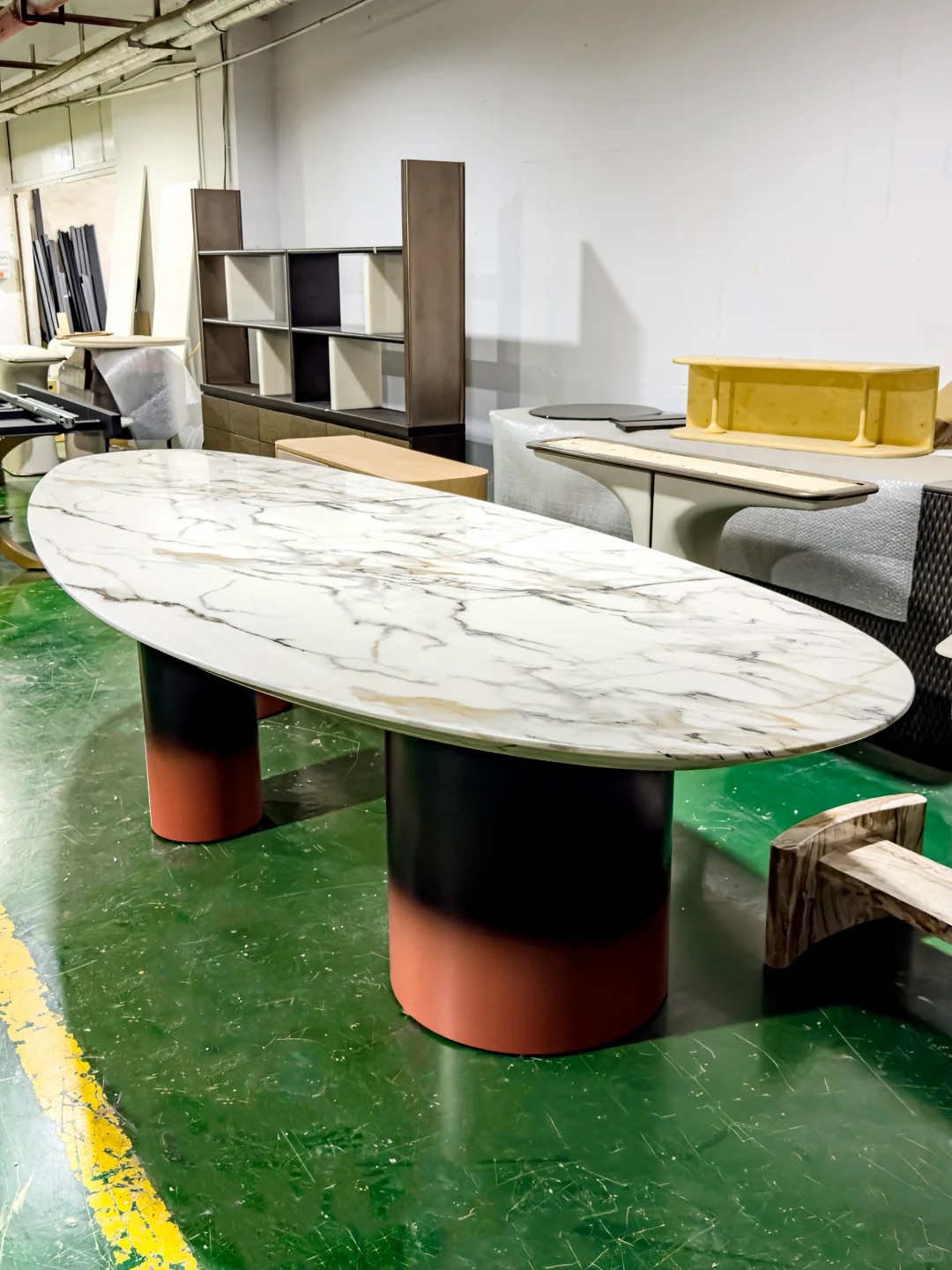
Compare table shapes on the same room plan with the same seating requirement. Choose the arrangement that leaves usable positions and workable movement, rather than assuming one shape always saves space.
Test Each Shape in Context
Draw the complete occupied arrangement, including chairs. A round top may work well in one room yet become awkward beside a narrow passage. A rectangular table can follow a long room, but its end seats still need checking. Square layouts need the same attention to corners and adjacent furniture.
Include How the Room Changes
For hospitality use, decide whether tables will be combined, moved or left fixed. Ask whether the selected designs can meet cleanly when joined and whether the bases obstruct the intended places. Record the everyday arrangement separately from an event layout.
Choose After Reviewing the Base
The same top shape can use very different understructures. Compare foot space, chair storage and access for cleaning. Keep the approved table and chair pairing on the schedule; a later chair substitution may alter the layout even if the table remains unchanged.
Approval Record
- Occupied footprint for each option
- Everyday and event arrangement
- Base relationship to each chair
- Approved plan and item references
Use the design review to resolve the actual room requirements rather than adopting a shape rule.
Equal tabletop area can hide different room dimensions
Area describes the size of the surface, but a floor plan also needs its shape and outside dimensions. Compare the widest projections of each option before adding the chairs.
For an arithmetic example, a square top measuring 0.90 × 0.90 m has an area of 0.81 m². A rectangle measuring 1.35 × 0.60 m has the same area. A circular top with that area has a diameter of approximately 1.016 m, calculated as 2 × √(0.81 ÷ π). Its bounding width and depth are therefore each larger than the square's 0.90 m.
The rectangle is narrower in one direction and longer in the other. None of these observations establishes which table fits a particular room or how many people it seats. The dimensions are hypothetical, not recommended dining-table sizes or YEINIHOME specifications.
Add the occupied arrangement to the comparison
Make a separate outline for each shape on the same checked plan. Include the proposed chairs in use, the leg or pedestal positions and any doors or storage fronts that open beside the group. Keep serving items on the top where they are part of the normal dining arrangement.
Record a conflict by location: a chair at the end of the rectangle, a passage beside the round top, or a cabinet door beside the square. “Too large” is less useful than identifying the point that needs a different dimension or arrangement.
The shape comparison is a practical planning exercise, not a clearance standard. Send YEINIHOME (言逸家) the preferred table and chair combination with the marked conflict points before requesting a size change.
Questions Before You Order
Is a Round Table Always Better in a Small Room?
No. Compare the occupied footprint, base and access routes on the actual plan rather than choosing from shape alone.
Can Separate Tables Be Pushed Together?
Confirm the tops, edges and bases work in the proposed arrangement. Review seating and movement again after joining them.
Do tables with the same surface area fit the same space?
No. A circle, square and rectangle can have equal area but different outside dimensions. Compare their occupied layouts with the actual chairs and bases; surface area alone does not establish seating capacity.