For a hotel or residential buyer, the useful question is whether the construction and approved sample meet the brief. A photograph of deep surface dimples cannot answer that question by itself.
Understand What Mattress Tufting Does
The National Bed Federation’s mattress buying guide explains that tufting passes tapes through a mattress and secures them on each side to restrain loose fillings. It distinguishes this from quilting, which attaches the cover to surface fillings and generally creates a flatter appearance.
That distinction matters when comparing quotations. “Tufted top,” “hand-tufted mattress” and “quilted cover” should not be accepted as interchangeable descriptions without an explanation of the proposed construction.
Ask the supplier to identify the layers crossed by the tufting and the securing arrangement. Request a construction description tied to the sample code. If a manufacturing detail is not disclosed, record it as unconfirmed rather than inferring it from the cover pattern.
Ask What the Hand Work Actually Covers
A mattress may combine hand operations and machinery. Clarify which operation the hand-tufted claim refers to and which parts of the proposed model use that process.
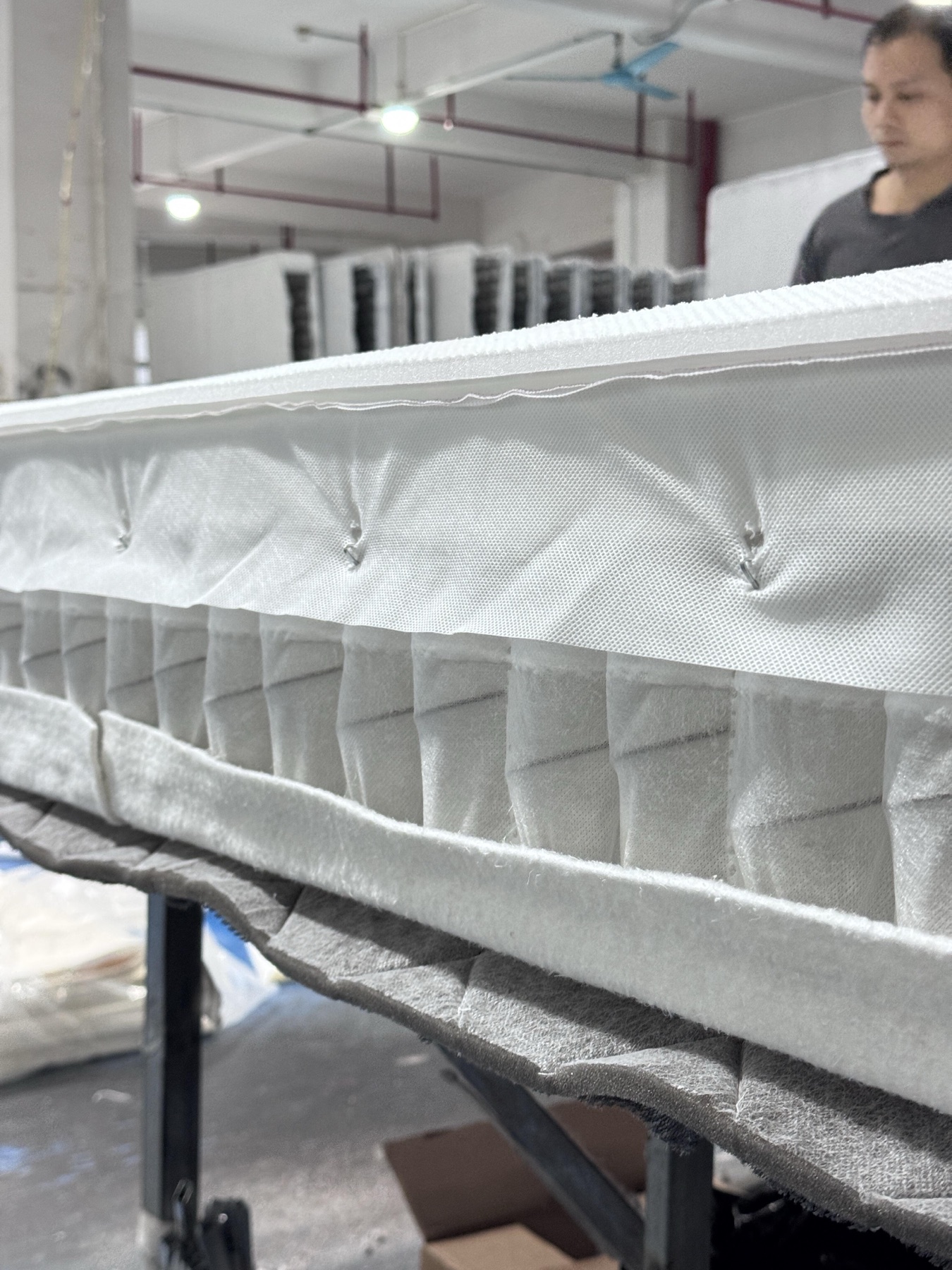
Process photographs can help explain a manufacturing step. A photograph of a worker using a needle and surface tufting materials is evidence of the visible operation, not a complete bill of materials. It cannot identify the fibre composition, spring specification or construction of every mattress in a range.
Label each process image with the sample or order it relates to. If the photograph shows another size or a development sample, state that relationship in the project file. A general factory photograph should not become an undocumented specification.
Compare the Surface With the Bedding You Will Use
Review the sample with the intended protector, sheet arrangement and any separately specified topper. Record that setup so another reviewer can understand the conditions behind the decision.
Pay attention to the areas around the tufts as well as the raised sections between them. Ask reviewers to note whether they notice the surface texture and whether the assembled bedding suits the planned use. These are observations about the tested sample, not medical findings or a guarantee of every guest’s preference.
If a topper is part of the proposed setup, identify it separately. It has its own specification, care requirements and replacement cost. A sample approved with one topper should not be described as an approval of the uncovered mattress.
| Review point | Record in the sample file |
|---|---|
| Identity | Model, sample reference, size and construction revision |
| Tufting | Supplier’s description of the fastening and layers involved |
| Surface | Visible finish and reviewers’ observations under the agreed bedding |
| Setup | Bed base, protector, sheets and any separate topper |
| Decision | Approved configuration, open questions and required corrections |
For broader construction differences, use the existing spring, foam and hybrid comparison guide. Keep the tufting review focused on the fastening process and finished surface rather than repeating a general mattress-type comparison.
Keep Materials and Performance Claims Separate
Hand tufting is a construction description. It does not prove that the fillings are wool, horsehair, cotton or another specific material. Request the proposed layer schedule and ask what evidence supports any composition claim relevant to the order.
Nor does a traditional appearance establish a fixed service life, a particular firmness or fire-test performance. Those require their own specification, assessment or applicable evidence. Do not transfer another manufacturer’s test result or certification to a visually similar mattress.
A useful comparison asks what differs between the actual samples: filling layers, support core, cover, fastening, base requirements and the agreed comfort configuration. The tufting detail remains one part of that comparison.
Obtain the Care Instructions for the Selected Model
The National Bed Federation’s bed-care advice tells buyers to follow the instructions supplied with their mattress. Obtain the proposed instructions before approval and ask whether that particular model is intended to be rotated, turned or handled in another specified way.
Confirm how housekeeping should respond to a loose or damaged tuft. Do not cut a fastening, pull out a tag or attempt a repair simply to make the surface look smoother. Seek the supplier’s assessment and the procedure appropriate to the affected construction.
Use the mattress sample inspection record to retain these documents with the approved sample. For the YEINIHOME mattress selection, send the intended size, base information and the construction questions still open. Confirm the exact model rather than ordering from a process photograph alone.
Before placing the order, the file should describe both the product and the setup that was accepted: a defined mattress, its bedding arrangement, care instructions and any unresolved evidence requests.
FAQ
Is a hand-tufted mattress always better than a quilted mattress?
The description alone cannot establish that. Compare the actual construction, intended use and finished samples. Buyers may prefer different surfaces and comfort configurations.
Can you feel the tufts through the bedding?
Assess the proposed sample with the protector and bedding intended for use. Record what reviewers notice rather than promising that every tuft will be unnoticeable to every person.
Does hand tufting prove that a mattress contains natural fibres?
No. Confirm the filling composition separately. A fastening method is not a material declaration.
References and Further Reading
- National Bed Federation: How to Choose a Mattress: distinction between quilting and tufting.
- National Bed Federation: Caring for Your Bed: follow the supplied mattress-care instructions.
Sources checked 19 October 2026. No universal comfort, durability or product-certification claim is made here.