Buying Guides / Dining Furniture Guides
Matching Dining Chair Height and Arms to a Table
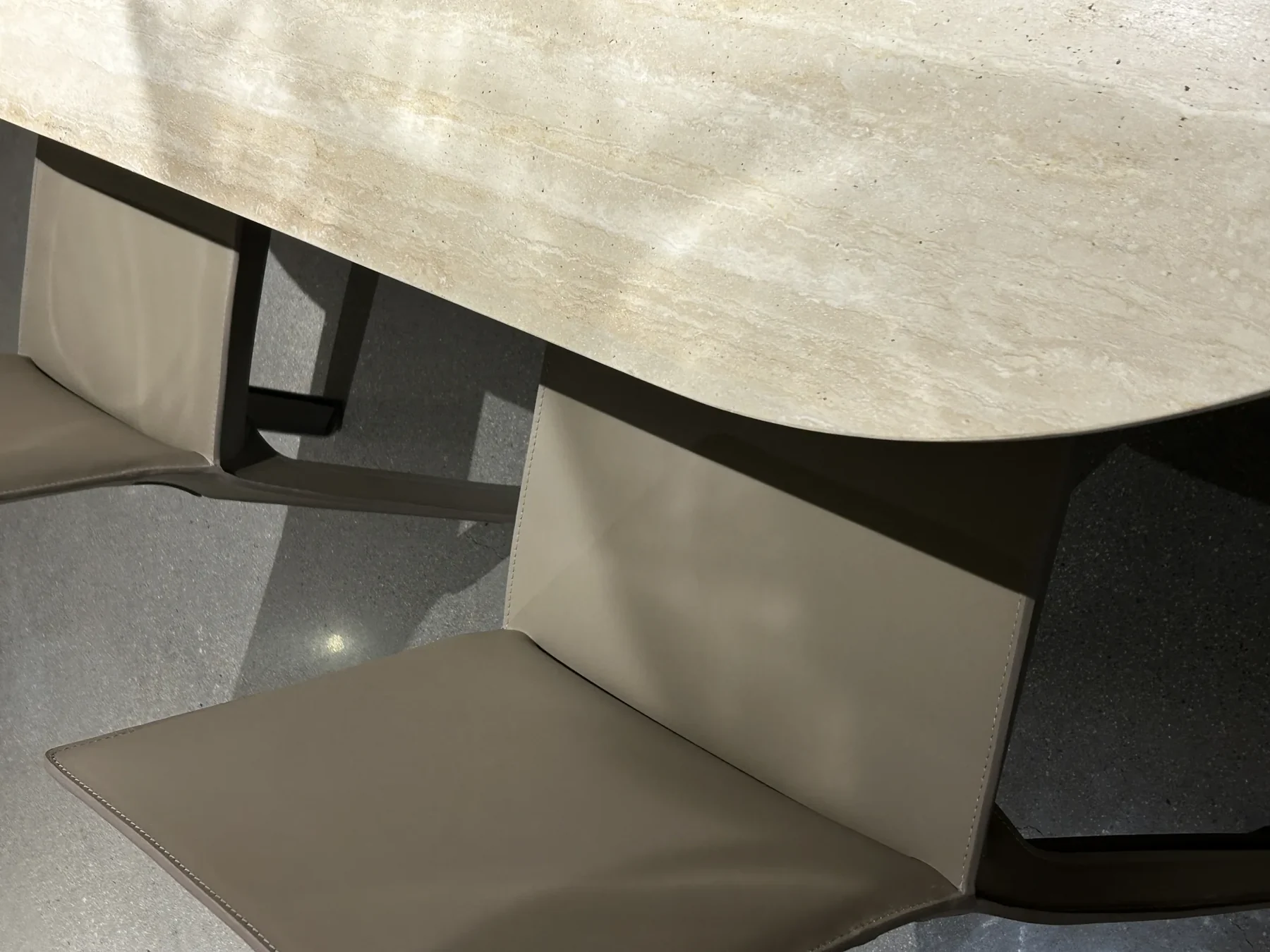
Check a dining chair against the table underside, apron and base, not only the tabletop height. For an armchair, confirm both the seated relationship and whether the arms can tuck under the table.
Measure the Relevant Surfaces
Record the table-top height and the lowest obstruction beneath it. Measure the chair seat and arm heights using an agreed method, noting the cushion condition. A thick apron can make a pairing awkward even when the top height looks conventional.
Review the Pair in Use
Sit at the proposed table with the sample chair. Observe the relationship to the eating surface, knee space and ease of moving in and out. Push the chair inward without forcing it and record any contact between arms, upholstery and the table. Check an end position as well as a side position.
Approve the Combination
Keep the table and chair codes together on the room schedule. If upholstery thickness, leg height or apron detail changes, recheck the pairing. Avoid adjusting a product on site simply to make an unreviewed combination fit.
Approval Record
- Top and underside heights
- Seat and arm measurements
- Knee and foot space
- Tucked and occupied chair positions
BSI describes safety, strength and durability requirements for non-domestic tables. BSI: BS EN 15372:2023 — Public Scope. Table performance requirements do not by themselves establish that a particular chair will fit underneath.
Measure the Seat, Arms and Lowest Table Obstruction
Use the finished floor as the common reference. Record the tabletop height, the lowest underside obstruction at the intended chair position, the chair seat measurement point and the highest part of the arms. Identify an apron, corner block or bracket on the drawing instead of recording only the underside of the top.
For illustration, a table might have a top at 750 mm but an apron underside at 640 mm. A chair with arms at 660 mm would overlap that apron vertically by 20 mm if its arms enter the apron zone. The top height alone would conceal the problem. These figures are hypothetical; they are not standard dimensions, required clearances or YEINIHOME product measurements.
Even when the arms are lower than the table underside, check whether the chair can tuck in. The arm shape, table legs and horizontal approach can still interfere. Record a side view and a plan view, then check the actual pair.
Keep a Pairing Record for Each Chair Position
| Position | Check on the proposed pair |
|---|---|
| Long side | Arm entry, knee space and chair movement between table legs |
| Table end | Pedestal or stretcher interference and foot position |
| Tucked position | First contact point and how far the chair remains outside the top |
| Occupied position | Seat feel, approach to the eating surface and room to leave the seat |
Keep the cushion condition with the seat-height measurement. The PFA furniture-design bulletin treats seat geometry and movement under load as parts of seating comfort. A drawing dimension and a seated observation describe different conditions.
Ask YEINIHOME (言逸家) to identify the table and chair references on the same confirmation. If the apron, arm profile, legs or upholstered seat changes, reopen the affected fit checks. This worksheet does not set an accessibility requirement or replace the designer's review for the intended users.
Questions Before You Order
Why Can a Chair Fit the Table Height but Not Tuck Underneath?
The apron or another lower obstruction may contact the arms. Compare those surfaces, not just the tabletop level.
Do End Seats Need Their Own Check?
Yes. The base and supports can create different knee and foot space at the ends, so review them with the actual chair.
Can I use tabletop height to decide whether arms fit?
No. Measure the lowest obstruction along the chair’s approach and check both vertical clearance and the shape of the legs, arms and apron.
Continue Your Procurement Review
For a YEINIHOME pairing review, send the table and chair references with the measurements you still need confirmed. See dining tables and chairs or send the room plan.
References and Review Notes
1. BSI: BS EN 15372:2023 — Public Scope
2. PFA furniture-design bulletin
Sources checked October 21, 2026. Standards references above are limited to their publicly readable scope.