Buying Guides / Coffee & Side Table Guides
Specifying Stone, Glass and Wood Coffee Table Tops
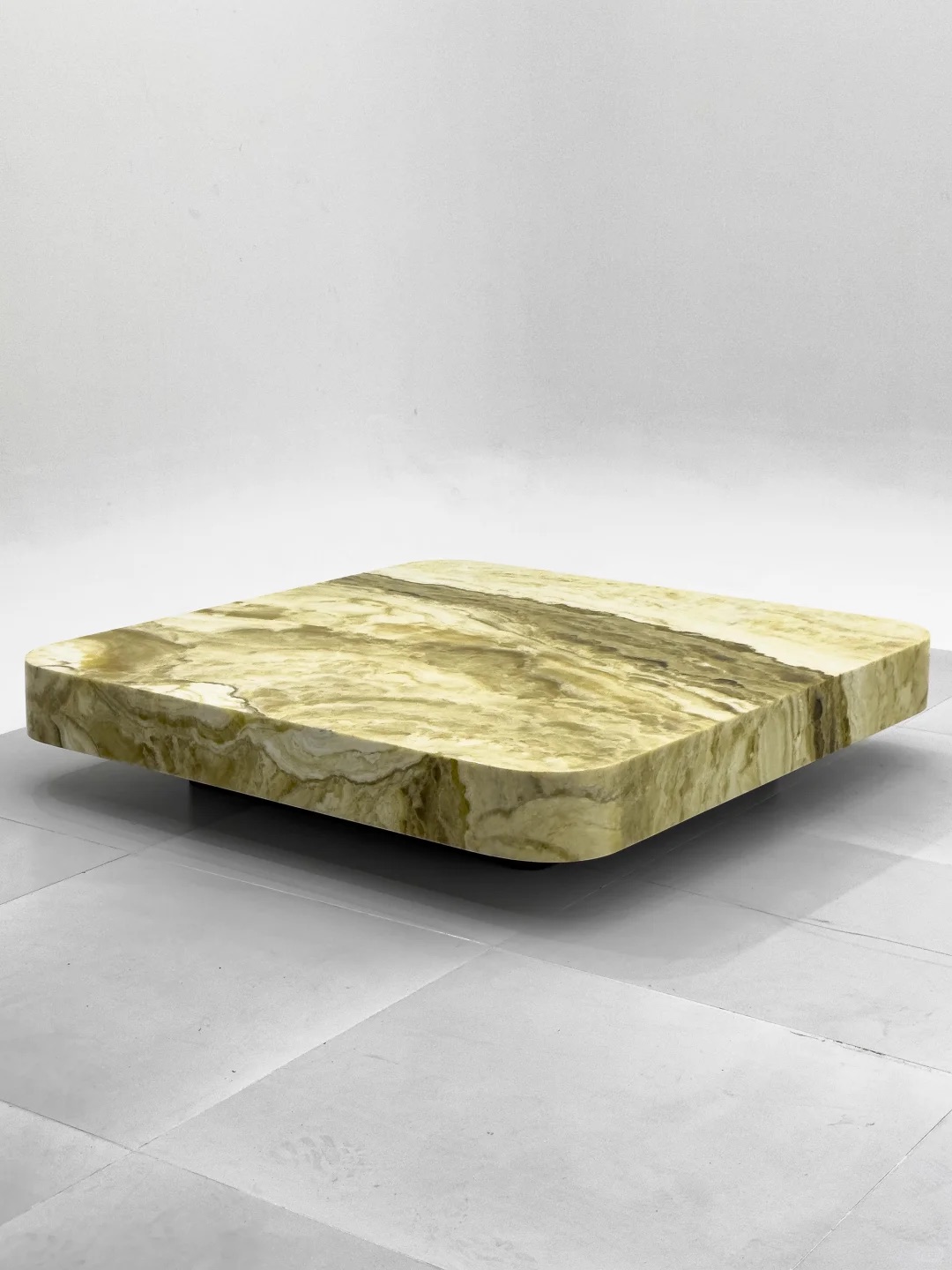
Specify the tabletop material, edge and support arrangement together. The visible finish does not fully describe the construction, and a material change can affect the base, handling and care requirements.
Record the Material Precisely
Ask for the actual surface description rather than accepting a generic marble-look or wood-look label. For stone, distinguish the named material from a printed or engineered alternative. For glass and timber products, ask for the construction and finish information relevant to the proposed model.
Review Edges and Connections
Use a drawing or sample to inspect edge shape, corner detail and the connection between top and base. Check whether the top is fixed or removable and how it is supported. A visually similar replacement top should not be ordered without confirming those interfaces.
Keep the Care Sheet With the Selection
Ask for approved cleaning instructions and any limitations on use. Review the finish sample with adjacent upholstery and flooring. Record accepted variation, particularly when several tables are intended to look coordinated across a room.
Approval Record
- Material and finish identity
- Top thickness and edge detail to confirm
- Top-to-base connection
- Cleaning and variation record
The Natural Stone Institute advises identifying the stone before selecting cleaning products. Natural Stone Institute: Care and Cleaning. Select care guidance for the actual stone and finish; a broad stone label is insufficient.
Separate Stone Identification From Finish Approval
Keep the material name, surface finish and supplier's care instructions together. A marble-look photograph cannot establish whether the top is natural stone, an engineered surface, ceramic or a printed finish. Natural-stone advice should not be transferred automatically to a different material.
For natural stone, the Natural Stone Institute's care guidance explains why composition matters: calcium-carbonate-rich stone is sensitive to acids. It also describes many sealers as repellents rather than a way to make stone stain-proof. A sealed label therefore does not settle which cleaning product is suitable.
Give the Operator a Usable Care Record
Request a record that identifies the exact top and finish, routine cleaner, dilution or application instructions supplied by its maker, and the response to spills. Keep stain removal and finish repair as separate questions. Avoid promising that a household cleaner will repair a dull patch; a change in surface appearance needs the material supplier's assessment.
Ask for a matching offcut or finish sample if a cleaning trial is needed. Use only an agreed procedure and document the product, application and observed result. A small trial can inform a cleaning choice, but it is not a durability certification or a guarantee against every stain.
- Material and finish reference, including any coating or treatment disclosed by the supplier.
- Approved routine cleaning instructions and products to avoid.
- Sample reference and any agreed trial conditions.
- Person to contact for damage or a finish change that routine cleaning does not resolve.
Confirm the Support Before Changing the Top
If a replacement surface is proposed, request its dimensions and attachment details against the existing base. Do not assume that equal length and width make it interchangeable. Keep handling instructions with the selected construction; a photograph cannot establish whether a top is designed to lift off.
For YEINIHOME coffee and side tables, include the exact finish reference when asking about care or replacement. The care record and substitution checks are editorial purchasing aids; no particular coating, sealer or replacement service is promised here.
Include the room conditions in a wood-top specification
The Canadian Conservation Institute explains that wood takes up moisture and swells as humidity rises, then releases moisture and shrinks as the air dries. Its guidance also warns that oil cannot prevent drying caused by excessively low humidity. Treat an oil finish as a finish specification, not as proof that a tabletop is unaffected by its environment.
Ask whether the top is solid wood, a veneered panel or another construction, and retain the disclosed substrate and finish details. A photograph of the grain cannot establish the internal construction. Do not apply one material's movement allowance or care procedure to every wood-look surface.
Review the attachment before accepting a replacement
Request the supplier's top-to-base detail and assembly instructions for the actual material. If a fitting includes a slot, washer or spacer, keep it in the documented arrangement. Do not add screws, fill slots or glue the top to the base to make it appear more rigid without an approved instruction.
Record the intended position near windows, heating or air outlets, together with any room conditions the supplier asks you to control. CCI's advice concerns conservation of wooden furniture; it supplies the moisture explanation here, not a numeric humidity specification or mounting design for a YEINIHOME table.
For a YEINIHOME (言逸家) coffee-table enquiry, submit the top construction, finish reference, room position and proposed base together. If a surface develops a gap, crack or changed appearance, photograph the whole table and the detail before attempting a repair. Ask for an assessment against that construction rather than treating every change as a need for more oil.
Questions Before You Order
Can a Similar-Looking Top Be Substituted?
Only after confirming its dimensions, support, attachment and care requirements against the selected base.
Does a Marble-Look Description Identify the Material?
No. Ask for the actual surface and finish specification before choosing samples, care products or replacement parts.
Does sealing make a natural-stone top stain-proof?
No. The Natural Stone Institute describes sealing as increasing stain resistance. Confirm care for the actual stone, finish and treatment.
Will adding oil prevent a wood tabletop from shrinking in dry air?
No. CCI explains that oil does not prevent drying when humidity is too low. Follow the selected finish and model instructions, and review the environment before attempting a treatment.
Continue Your Procurement Review
For a YEINIHOME tabletop enquiry, include the material and finish reference, base and care question. See coffee and side tables or send the specification.
References
Sources checked October 28, 2026.