Buying Guides / Coffee & Side Table Guides
Round, Square and Nesting Coffee Tables in a Room Plan
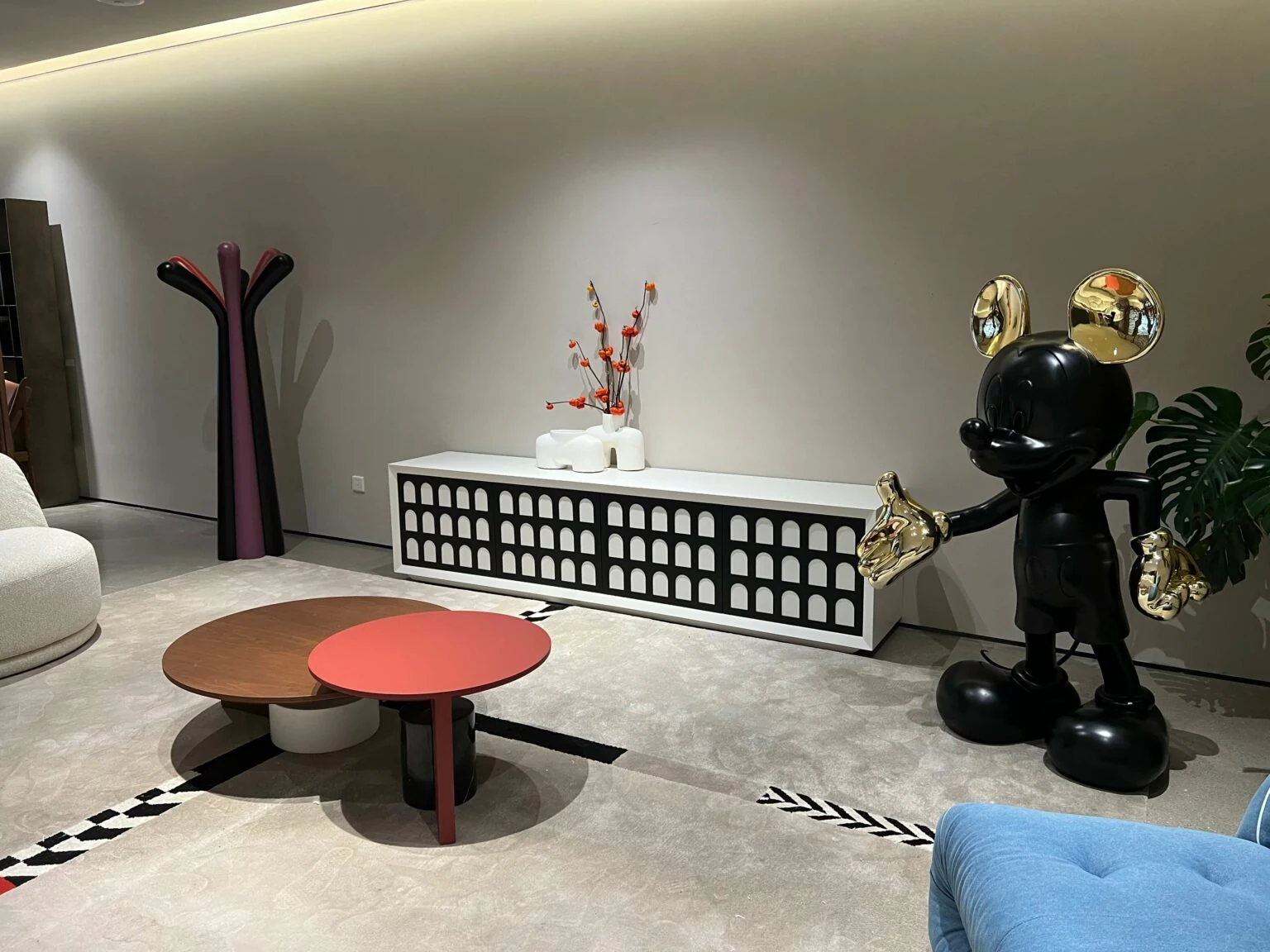
Choose coffee-table shapes by how the group will be used and moved. Compare the complete arrangement, including gaps, overlapping tops and the base footprint, before approving a set.
Draw the Working Arrangement
A nesting set has a stored position and a position in use. Draw both. If a hotel operator expects staff to spread the tables for groups, identify where each piece goes and what routes remain available.
Check the Relationship Between Pieces
Review overlapping edges, height differences and access to each surface. Ask whether the tables are intended to slide together and how they should be moved. Do not assume that two visually similar tables are designed to nest.
Choose a Manageable Set
Consider cleaning and rearrangement with the operations team. Record the size and weight of each piece when handling matters. For a residence, check whether the set still works when a lounge chair is pulled forward or a sofa module is moved.
Approval Record
- Stored and occupied layouts
- Height and overlap details
- Base footprint of each piece
- Movement and cleaning responsibilities
BSI describes safety, strength and durability requirements for non-domestic tables. BSI: BS EN 15372:2023 public scope. Table performance documentation is separate from the suitability of a particular nesting arrangement.
Calculate the nesting-table arrangement, not just the diameters
Record the footprint of the complete set in each proposed position. Adding individual tabletop widths describes a line with no overlap; it does not necessarily describe the arrangement beside the sofa. The bases may also extend beyond the visible overlap or prevent the intended nesting position.
For a hypothetical pair of round tops, one 0.90 m wide and one 0.70 m wide, a permitted 0.30 m overlap along the measured line gives an overall projected width of 0.90 + 0.70 − 0.30 = 1.30 m. With no overlap, the sum is 1.60 m before any gap is added. This is geometry for an example layout, not a dimension or approved position for a YEINIHOME model.
Check which surfaces remain usable
The overlapping portion of a lower top is not available for placing objects while another top covers it. Draw the exposed surface and the base outline separately. Review where cups or trays would go without leaving objects partly beneath a moving top. Do not slide one piece while objects bridge both surfaces.
Mark each table's intended movement on the plan. Confirm whether the manufacturer permits sliding, requires lifting, or specifies another method. Canadian Conservation Institute guidance for wooden furniture warns that dragging stresses legs and joints. It is a useful handling caution, not permission to use one technique for every stone, glass or metal assembly.
The public scope of BS EN 15372:2023 concerns non-domestic table safety, strength and durability. It does not establish that an improvised combination of two tables is a tested nesting set. Ask YEINIHOME to confirm the intended relationship between the pieces in the selected table set, then retain both stored and working plans.
Questions Before You Order
Can Any Two Tables Be Used as Nesting Tables?
Do not assume so. Confirm that the heights, edges and bases are intended to fit together and follow the movement instructions.
What Should Housekeeping Review?
Review access between pieces, cleaning beneath the set and the permitted way to move each table.
Is the sum of two tabletop widths the footprint of a nesting set?
Only when the measured arrangement has no overlap or gap along that line. Use the actual permitted position, and check the bases as well as the tops.
Continue Your Procurement Review
- Choosing Coffee Table Size and Height With a Sofa
- Planning a Conversation Area With Sofas and Lounge Chairs
References
Sources checked October 24, 2026. Examples and suggested records are editorial planning aids. Standards are discussed only within their publicly readable scope; these references do not certify a product.