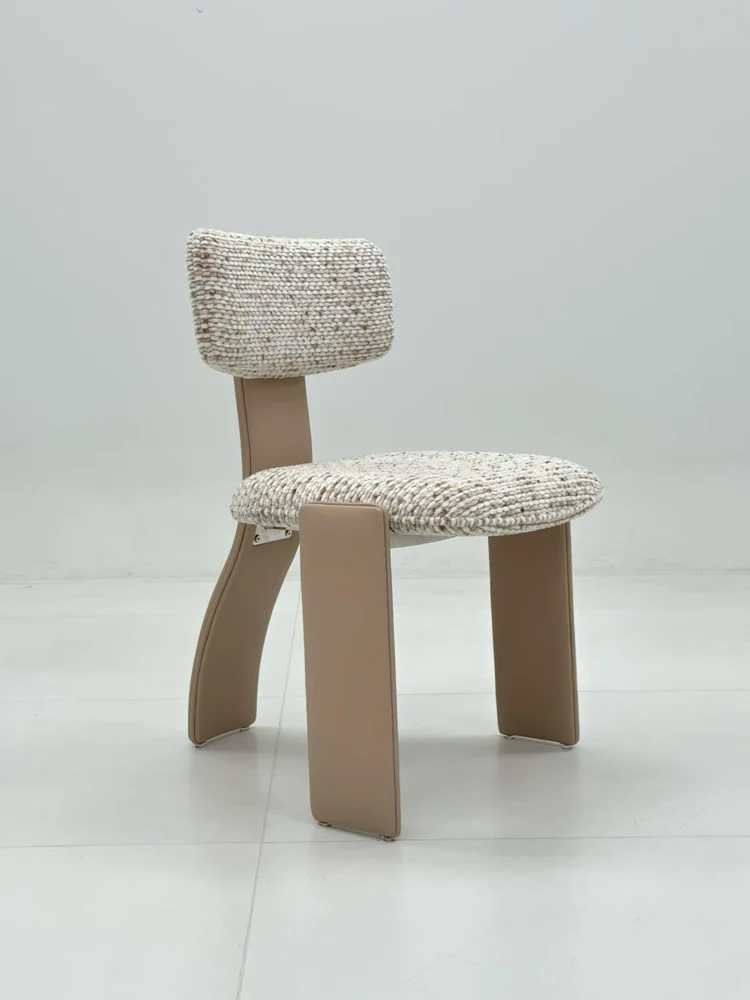
A chair may suit the dining table but leave an awkward storage problem after service. The purchasing review needs to cover both uses before the sample is approved.
Confirm That the Selected Version Is Designed to Stack
Ask for written stacking instructions for the actual chair configuration. A side chair, an armchair and an upholstered version from the same product family may have different restrictions. Do not assume that a photograph of several chairs proves an approved stacking arrangement.
Request the maximum permitted chair count and the conditions attached to it. Clarify whether the stated arrangement applies on the floor, on a designated trolley or only during storage. Ask whether added seat pads, different upholstery or another accessory changes the instructions.
If the supplier has not confirmed stackability, leave it unresolved. Do not stack a model experimentally to establish a limit. The manufacturer’s instructions and the venue’s handling assessment must guide the proposed setup.
Measure the Stack You Intend to Store
A single-chair width and depth do not describe the footprint of a stack. Ask for the assembled dimensions of the proposed stored configuration, including a trolley where one is required.
Check those dimensions against the allocated store and the route to it. Include the doorway, turning space and any obstruction that affects access. A storage drawing that fits every stack tightly into a rectangle may still leave no practical way to retrieve a chair.
The UK Health and Safety Executive’s warehousing and storage guidance advises planning storage and workflows so goods do not obstruct walking routes. This is general workplace guidance, not a chair-specific stacking limit or a statement of compliance for a venue outside its jurisdiction.
| Information to confirm | Why it belongs in the buying brief |
|---|---|
| Exact chair configuration | Links the instructions to the sample being ordered |
| Permitted stack arrangement | Defines chair count and any floor or trolley conditions |
| Stored dimensions | Allows the proposed storage footprint to be checked |
| Handling equipment | Identifies any required trolley and its compatibility |
| Route and retrieval space | Checks access while the store is actually in use |
Do not calculate storage savings from the seated footprint alone. Use the dimensions of the approved arrangement and retain working space around it.
Review the Contact Points on the Sample
Ask where the chairs are intended to touch when stacked. Look for the specified supports or protective components and compare them with the supplied instructions. Establish whether those components can be replaced if damaged.
Where the supplier permits a stacking demonstration, have it carried out within the stated instructions. Inspect the relevant contact areas before and after the demonstration and photograph visible marks or interference. This is a sample observation, not a durability test.
Upholstery needs a separate check. Ask whether fabric or padding touches the adjacent chair and how the approved arrangement protects the finish. Any observed problem should remain open until the supplier proposes a correction and the revised configuration is reviewed.
For the chair-and-table pairing itself, use the existing dining-set inspection guide. That review covers seating use; the storage review adds another operating condition.
Include the People Who Will Move the Chairs
Ask the venue’s operating team to assess the task with the proposed chairs and equipment. Relevant questions include how often the room changes layout, who moves the chairs and what the route is like when the dining area is busy.
HSE’s manual-handling guidance considers the task, individual capability, load and working environment. Review the repeated task as well as the weight of one chair. The venue should decide the handling procedure through its own assessment.
Clarify whether a trolley is included in the quotation or must be ordered separately. Check its identity against the proposed chair arrangement. A trolley that looks similar to the illustrated one is not enough to establish compatibility.
Record the instructions the operating team needs, including what to do if a chair or protective component is damaged. Do not keep a damaged item in the normal stack while waiting for an assessment.
Put the Storage Arrangement in the Order File
Approve a defined combination: chair model, configuration, permitted stack, any specified trolley and the instructions provided. If the upholstery or frame changes before production, ask whether the stacking information needs to be reviewed again.
For a dining furniture enquiry with YEINIHOME, state that stackability is a requirement and provide the storage and route constraints. Ask whether a proposed model can meet that requirement; do not assume every chair in the category is stackable.
Give the receiving and operating teams the approved arrangement and its instructions, together. Confirm the instructions and practical storage fit before treating stackability as a reason to place a bulk order.
Check the last stack as well as the first
Draw the store with every planned stack in place, then trace the retrieval sequence. Identify whether the trolley can reach each stack, turn where needed and return through the doorway. Keep the door swing and any required access to equipment visible on the drawing.
Consider a hypothetical store with four stacks in a front row and four behind them. Eight stack footprints may fit on the plan, but a rear stack might require moving a front stack first. Mark where that displaced stack will go. If its temporary position blocks the only working route, the eight-stack layout has not yet demonstrated usable capacity. This is a planning example, not an approved stacking arrangement.
Give temporary movements a place on the plan
Use separate outlines for stored stacks, the trolley during retrieval and any temporary holding position. Review the intended movement with the venue’s operations team and the model’s handling instructions. Do not increase the permitted stack height to solve a space shortage.
HSE’s storage guidance calls for workflows that keep goods and equipment out of walking routes. Its manual-handling guidance also considers the tasks and workplace. Applied here, the review covers the store while chairs are moving, not only when the door is closed.
Record any stack that cannot be retrieved under the agreed procedure as unresolved. For a YEINIHOME (言逸家) dining-chair enquiry, send the storage plan and operating requirement alongside the proposed chair and trolley references. The supplier’s permitted stack and the venue’s usable storage capacity answer different questions.
FAQ
Does fitting every stack footprint prove the store has enough capacity?
No. Check access to each stack, trolley movement and temporary holding positions with the store full. Keep routes clear and follow the approved chair and handling instructions.
How many dining chairs can be stacked safely?
There is no single limit for all dining chairs. Obtain the selected model’s instructions and check the stated arrangement, accessories and handling conditions.
Can upholstered chairs be stackable?
Some models are designed for it, but upholstery alone does not establish suitability. Confirm the exact version and review its permitted contact points and storage arrangement.
Does a stackable chair always need a trolley?
Follow the model’s instructions and the venue’s handling assessment. Ask whether the quoted stacking limit applies on the floor, on a trolley or under another specified condition.
Discuss Your Furniture Brief ↗
References
Sources checked October 28, 2026.