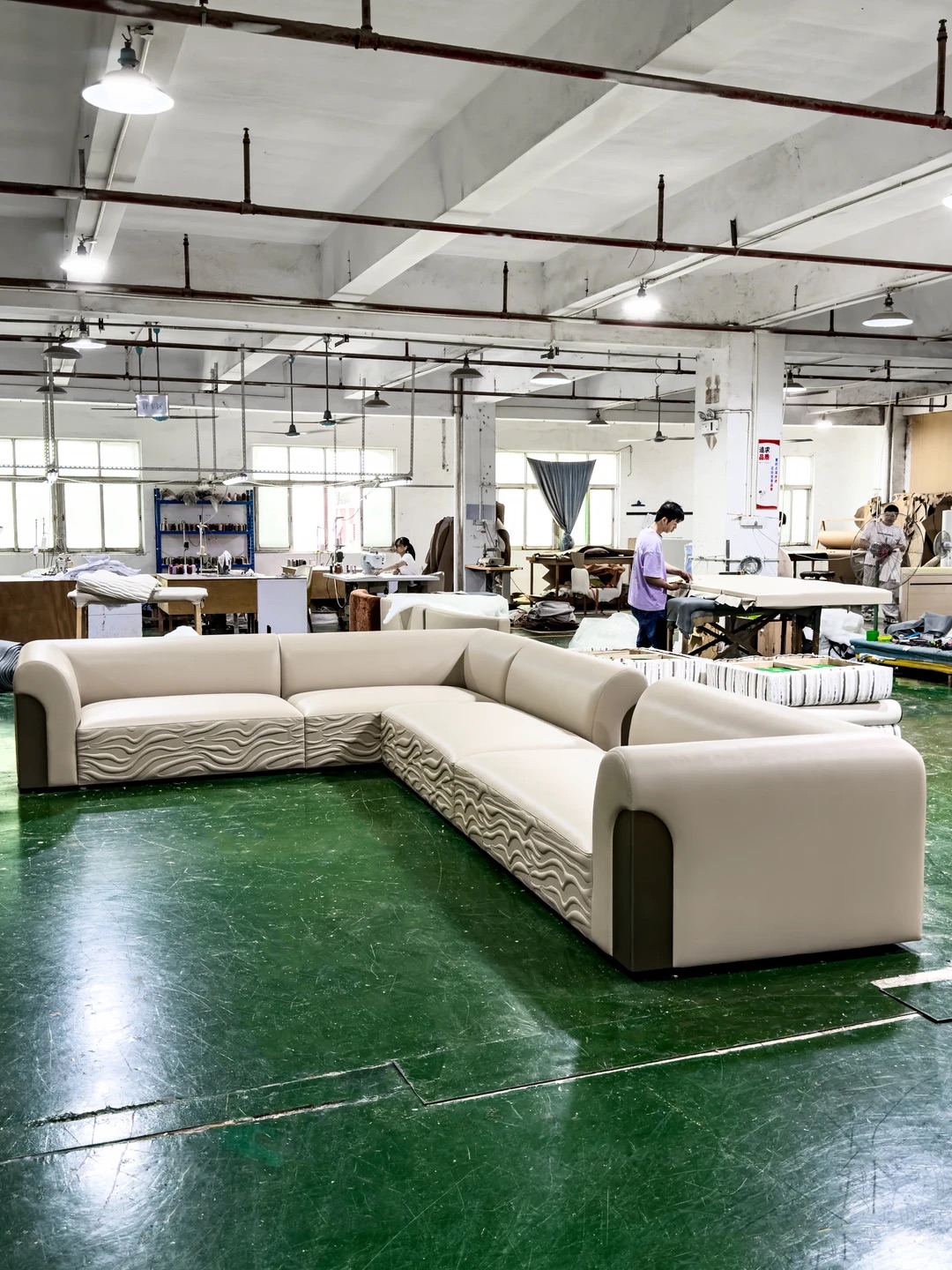
A unit price cannot answer all of those questions. Two offers for a similar-looking bedside table may cover different materials, packaging, freight, and installation. The useful comparison is the specified furniture delivered under an agreed scope.
1. Prepare a quotation package that can be priced accurately
Send an item schedule with quantities, dimensions, room types, drawings, finishes, and destination. Identify the required-on-site date and whether the property can accept a complete shipment or needs phased delivery.
Include operational details that influence the product: cleaning requirements, intended location, assembly expectations, and replacement-part needs. List required product documentation and approval steps in the request.
If some decisions are open, ask the supplier to price a defined base specification and identify alternatives separately. This preserves a comparison even while the design develops.
2. Verify the company and its role in the order
Establish the legal contracting entity and whether the business manufactures, trades, or coordinates production across factories. Each arrangement can work, but the buyer needs to know who controls drawings, samples, quality checks, and corrective action.
Request business details, a factory visit or live walkthrough where practical, and permission to verify relevant project references. Review whether the proposed production site can make the particular furniture being ordered.
Match the entity on the quotation, purchase order, and payment instructions. Independently verify changes to bank details through an established contact route. A polished showroom or long product catalog does not resolve those checks.
3. Specify the furniture below the surface
Record the substrate, veneer or laminate, edge construction, hardware, upholstery build, fixings, and finish reference for each applicable item. Include dimensions that connect to other products, such as the mattress, minibar, lighting, or countertop.
Request a bill of materials or equivalent construction description for the approved product. Clarify how any material substitution will be proposed and approved.
A request for “the same quality as the sample” is difficult to manage if the sample has no recorded construction. Connect the physical sample to drawings and material references that can be checked during production.
4. Check destination requirements before approving materials
Give the supplier the destination country and ask which documents apply to the actual products. Have the importer, testing laboratory, or relevant specialist confirm requirements before manufacture.
For U.S. orders, EPA’s TSCA Title VI guidance addresses regulated composite wood products and finished goods containing them.[1] In-scope upholstered seating also needs review against the CPSC’s flammability requirements.[2] These are different subjects; a document addressing one does not establish compliance with the other.
Ask for evidence linked to the supplied materials and product configuration. Avoid treating an unrelated certificate, a factory membership, or a report for a different model as approval for the order.
5. Approve samples and keep the decision record
Review drawings before the prototype is built. Then check the prototype for dimensions, finish, construction, comfort, hardware operation, and assembly. Where possible, test the furniture in the intended room arrangement.
Record accepted deviations and required corrections. Keep approved finish samples and identify the version released for production. If a revised sample is needed, agree who pays and how the revision affects the schedule.
For orders covering several furniture categories, define which items need full prototypes and which can be reviewed through drawings, material samples, or another agreed method. Make that decision based on product risk rather than leaving it implicit.
6. Agree the inspection and correction process
Set the inspection stages, acceptance criteria, sampling approach, inspector, and reporting requirements before production begins. Decide how dimensional checks, finish review, hardware operation, quantities, and packing will be recorded.
Write down what happens when an inspection identifies defects. Who approves repairs? Will affected items be reinspected? How does the decision connect to shipment release and the payment milestones in the contract?
Inspection reduces uncertainty about the items inspected. It does not remove every risk or replace a warranty. Keep the approved specification, inspection report, and corrective-action record together.
7. Define packaging and the complete delivery scope
Ask for packaging drawings or photos for the actual product type. Discuss protection for edges, corners, glass, hardware, and finished surfaces. Match carton labels to item codes and the room or delivery-phase schedule.
Compare freight proposals using package dimensions, weight, shipment terms, destination charges, and site requirements. Confirm who handles customs clearance, duties, final delivery, unloading, and any temporary storage. Obtain current import and tariff advice for the specific goods and destination rather than relying on an old percentage from another project.
Specify the Incoterms rule, named place, and edition in the contract. These rules allocate defined delivery tasks, costs, and risks; they do not determine payment timing, ownership transfer, or remedies for late or nonconforming goods.[3]
Before-order checklist
| Area | Evidence to agree |
|---|---|
| Supplier | Contracting entity, production role, verified payment instructions |
| Product | Item schedule, drawing revision, materials, approved samples |
| Requirements | Destination-specific documentation for the supplied products |
| Quality | Inspection scope, acceptance criteria, correction process |
| Shipping | Packaging, labels, Incoterms reference, delivery responsibilities |
| After-sales | Claim process, spare parts, replacement terms, care records |
Frequently asked questions
Is buying directly from a factory always cheaper?
Compare the complete scope. A factory quotation may exclude coordination, inspection, freight, import costs, or site services that another proposal includes. The lower unit price may still be attractive, but price those responsibilities before deciding.
Should furniture be inspected before shipment?
Agree a suitable inspection plan for the product and order. Inspection before shipment gives the parties an opportunity to identify and address issues while the goods remain at origin. Define the process in the purchase agreement.
Does a delivered price include installation?
Ask for the exact service boundary. Arrival at a destination, unloading, movement to guestrooms, assembly, fixing, and acceptance are separate activities that need an assigned scope.
Make the purchase order specific enough to inspect
A practical checklist for buying hotel furniture from China should end in written decisions: the exact furniture, approved reference samples, inspection criteria, shipment responsibilities, and support arrangements. Use those decisions to evaluate quotations and release the order.
To discuss hotel furniture manufacturing and project supply from YEINIHOME, provide the schedule, drawings, destination, and required-on-site date. Use the hotel furniture quote comparison guide to keep offers on the same scope.
References and sources
- Composite wood regulatory FAQs — U.S. Environmental Protection Agency.
- Upholstered furniture guidance — U.S. Consumer Product Safety Commission.
- Know Your Incoterms — International Trade Administration.