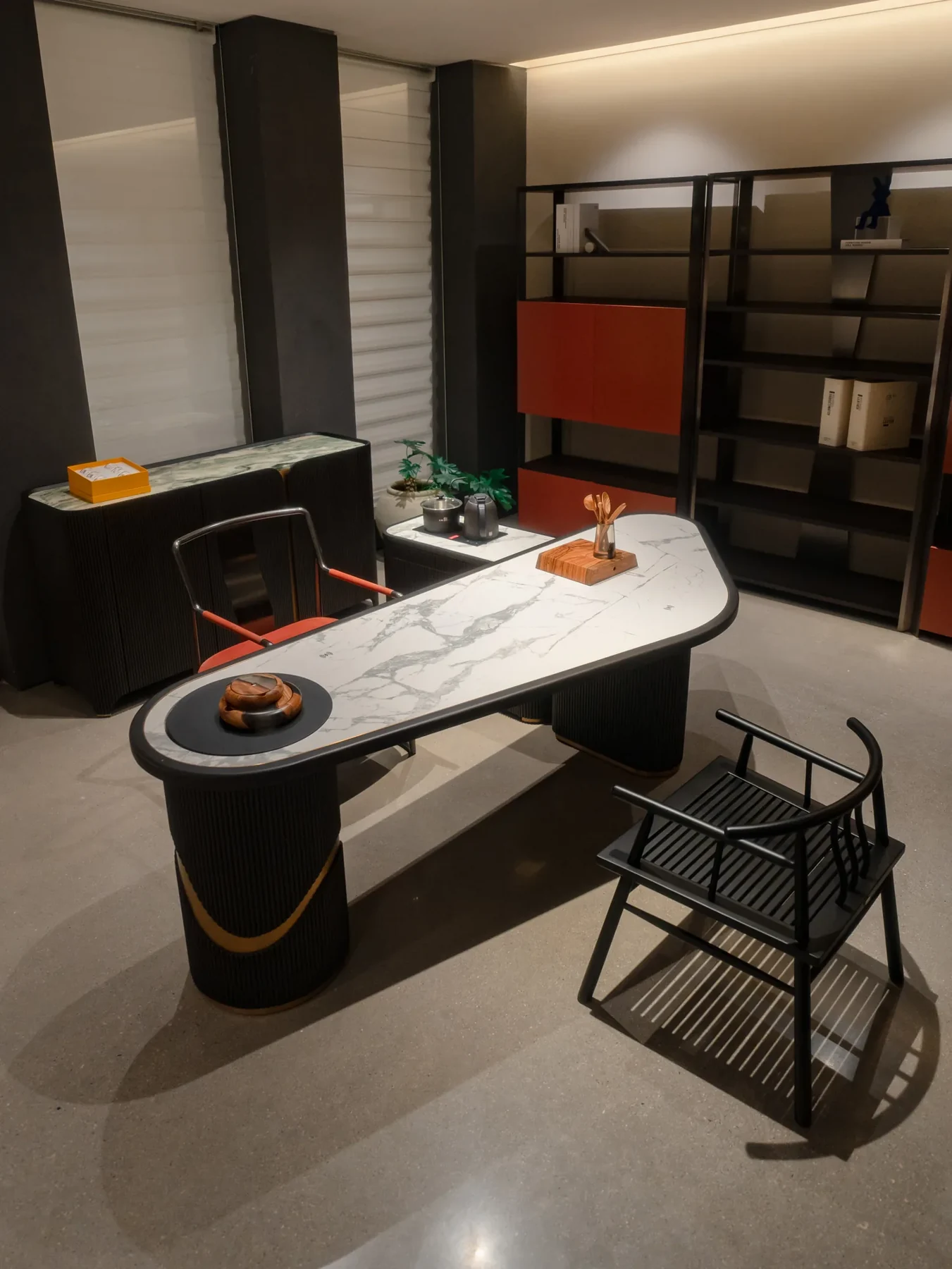
For a small hotel, these details affect the next purchase as much as the first. A chair that needs a new glide is a different maintenance problem from a chair that needs to be discarded because its seat cannot be sourced.
Start with the failures in your existing furniture
Before requesting quotations, photograph the furniture you are replacing and record what failed. Separate loose fasteners, broken joints, damaged upholstery, peeling edges, scratched surfaces, and uncomfortable seating. Ask housekeeping and maintenance to contribute: they handle these items under different conditions.
Use that record to write specific requirements. If chairs become loose, ask for joint details and assembly instructions. If desk edges lift, ask how the edge is attached and what cleaning exposure the supplier has evaluated. If a finish becomes cloudy, send the supplier the actual cleaner name and dilution instructions.
A useful brief says “replaceable seat pad and supplier-approved cleaning instructions.” “Better quality than the last order” gives a manufacturer little to work with.
Review the desk as an assembly
Ask for a drawing that identifies the top, substrate, edge treatment, supports, hardware, and cable openings. A wood-look surface may use different materials underneath, so review the complete construction rather than judging the photograph.
Check how the top connects to its supports and how the desk resists side movement. For assembled furniture, confirm which connections can be inspected or tightened. For flat-packed furniture, establish who assembles it, which tools are required, and how the completed assembly will be checked.
Avoid selecting materials by a simple solid-wood-versus-panel rule. Compare the proposed construction, intended environment, documented performance, and repair method. A material name alone does not describe the finished desk’s suitability.
For U.S. purchases containing regulated composite wood, review the applicable TSCA Title VI requirements with the supplier and importer. EPA identifies hardwood plywood, MDF, and particleboard as regulated product categories; the relevant documentation depends on the product and the buyer’s role.[1]
Match chair testing to the actual seating product
Request the test report for the offered model and configuration. Check the report’s standard, edition, laboratory, product identification, and result. If the supplied chair differs from the tested version, ask how that difference has been evaluated.
BIFMA publishes separate standards for different seating categories and for desks and tables. Select the applicable standard with the supplier or testing laboratory; a generic claim that an entire catalog is “BIFMA approved” leaves too much unclear.[2]
Testing also does not answer every guestroom question. Sit in the sample at the proposed desk. Check whether the arms fit below the top, whether the chair can be pulled out in the available space, and whether it remains comfortable for a guest using a laptop.
Have maintenance inspect the underside. They should be able to identify accessible fasteners, replaceable glides, and any parts requiring a special tool. Keep the supplier’s instructions with the model record.
Test the finish against your cleaning routine
Give the supplier the cleaning products used on the property and ask for written compatibility guidance. Request a finish sample or spare component for a controlled cleaning trial following those instructions. Do not experiment on installed furniture with stronger chemicals to speed up the test.
Inspect seams, exposed edges, corners, and contact points. On upholstery, review the specified fabric and the supplier’s cleaning method together. An abrasion result does not, by itself, establish resistance to every stain, disinfectant, or cleaning process.
For upholstered seating supplied to the United States, check the applicable flammability requirements separately from durability. CPSC’s guidance on 16 CFR part 1640 addresses smolder resistance for in-scope upholstered furniture; it is not a general promise of service life.[3]
Use a sample review sheet before releasing the order
Approve a representative desk-and-chair combination in a room or a measured room mock-up. Record the reviewed configuration so the production order has a clear reference.
| Check | What to record |
|---|---|
| Fit | Desk dimensions, chair clearance, door and delivery access |
| Construction | Model, materials, joint details, assembly requirements |
| Finish | Approved color sample and cleaning instructions |
| Seating | Comfort review and applicable test report reference |
| Maintenance | Replaceable parts, tools, service instructions |
| Acceptance | Agreed inspection criteria and approved drawing revision |
Ordinary sample checks do not replace laboratory testing. They help identify room-fit, finish, comfort, and maintenance problems before those decisions are repeated across the order.
Compare the cost of keeping furniture usable
Compare delivered and installed cost, then add the expenses your team is likely to face: assembly, repairs, spare parts, replacement freight, and disposal. Keep service-life assumptions separate from supplier commitments.
Ask what the warranty actually pays for. Parts-only coverage, for example, may leave labor and freight with the hotel. Clarify how claims are submitted and how urgent replacements are handled.
When a model offers replaceable components, confirm that those components are available to purchase. A detachable part is useful only if it can be identified and supplied later.
Frequently asked questions
Is commercial furniture always more durable than residential furniture?
Compare evidence for the specific product. Review intended use, construction, applicable testing, cleaning guidance, warranty terms, and parts support. A sales category alone is not enough to establish performance.
Should a small hotel buy assembled or flat-packed furniture?
Choose based on the assembly design, available labor, delivery route, inspection process, and supplier instructions. Include assembly time and responsibility in the comparison rather than considering shipping cost alone.
How many spare chairs should a hotel order?
There is no single percentage suitable for every property. Review replacement lead time, model availability, storage conditions, past damage records, and whether parts can restore a chair without replacing it.
Make the next order easier to maintain
The best specification for hotel desks and chairs connects product selection with daily operations. Approve the sample, record the exact configuration, and agree how worn or damaged components will be replaced. Keep those records ready for the next refurbishment rather than starting the same search again.
For a sourcing discussion, prepare room quantities, dimensions, finish requirements, destination, and the date the furniture must be available for installation.
For room seating selections, review YEINIHOME lounge chairs. Coordinate them with the hotel furniture project brief and confirm the specifications for each selected item.
References and sources
- Composite wood regulatory FAQs — U.S. Environmental Protection Agency.
- Furniture standards descriptions — BIFMA.
- Upholstered furniture guidance — U.S. Consumer Product Safety Commission.